
*This post may contain affiliate links for which I earn commissions.*
The tarot’s Major Arcana holds some of the most haunting and mysterious imagery you’ll find in any divination system. While a lot of folks focus on uplifting cards like The Sun or The Star, I always end up a little more mesmerized by the darker, more enigmatic symbols that show up across these 22 powerful cards.
The Major Arcana contains deeply spooky symbolism including death imagery, shadowy figures, crumbling towers, and occult references that reveal profound spiritual truths about transformation and the human psyche.
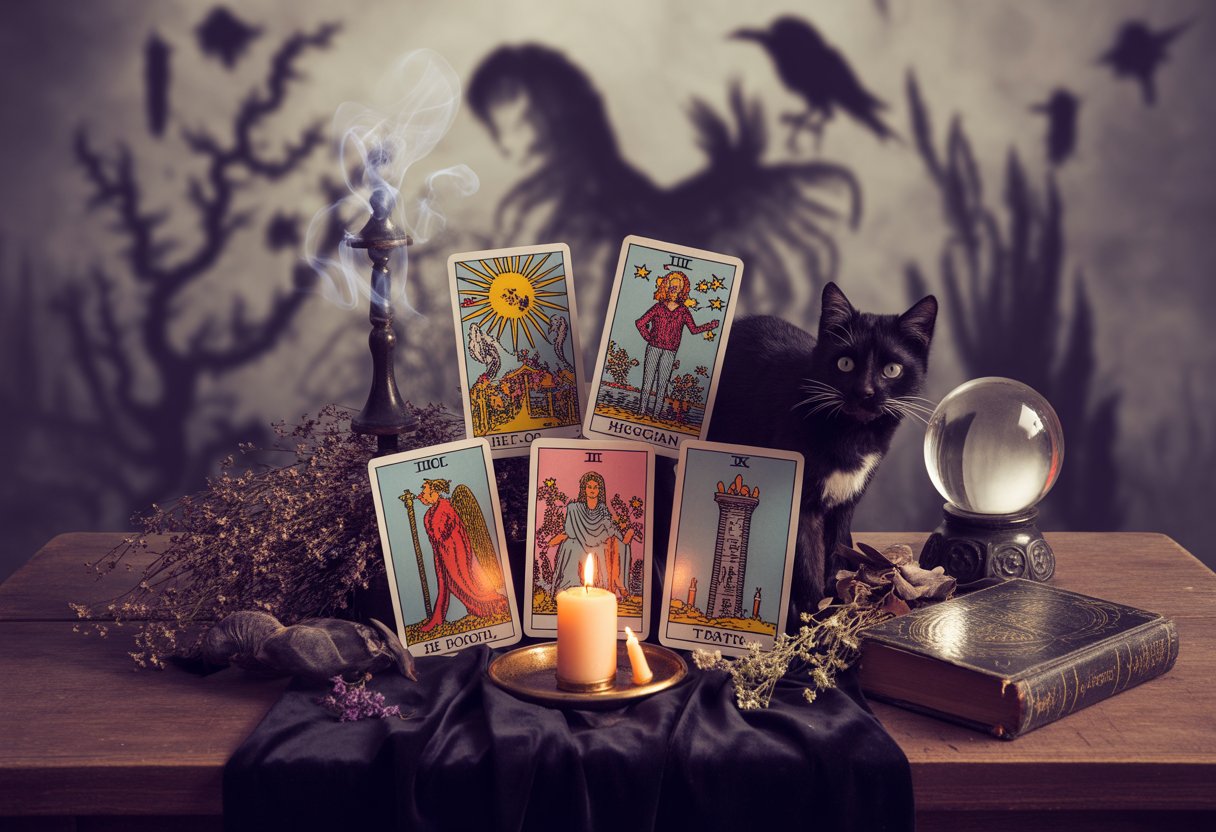
I’ve always been fascinated by how these seemingly frightening symbols actually offer some of the most valuable insights for personal growth. (Curious why we love eerie imagery so much? This quick read explains it)
Cards like Death, The Devil, and The Tower might look scary at first glance, but they carry messages about necessary endings, breaking free from limitations, and sudden revelations that can change your life.
The archetypal themes that influence your soul’s journey often come wrapped in mysterious imagery that speaks to our deepest fears and hidden wisdom.
What Are the Major Arcana Cards?
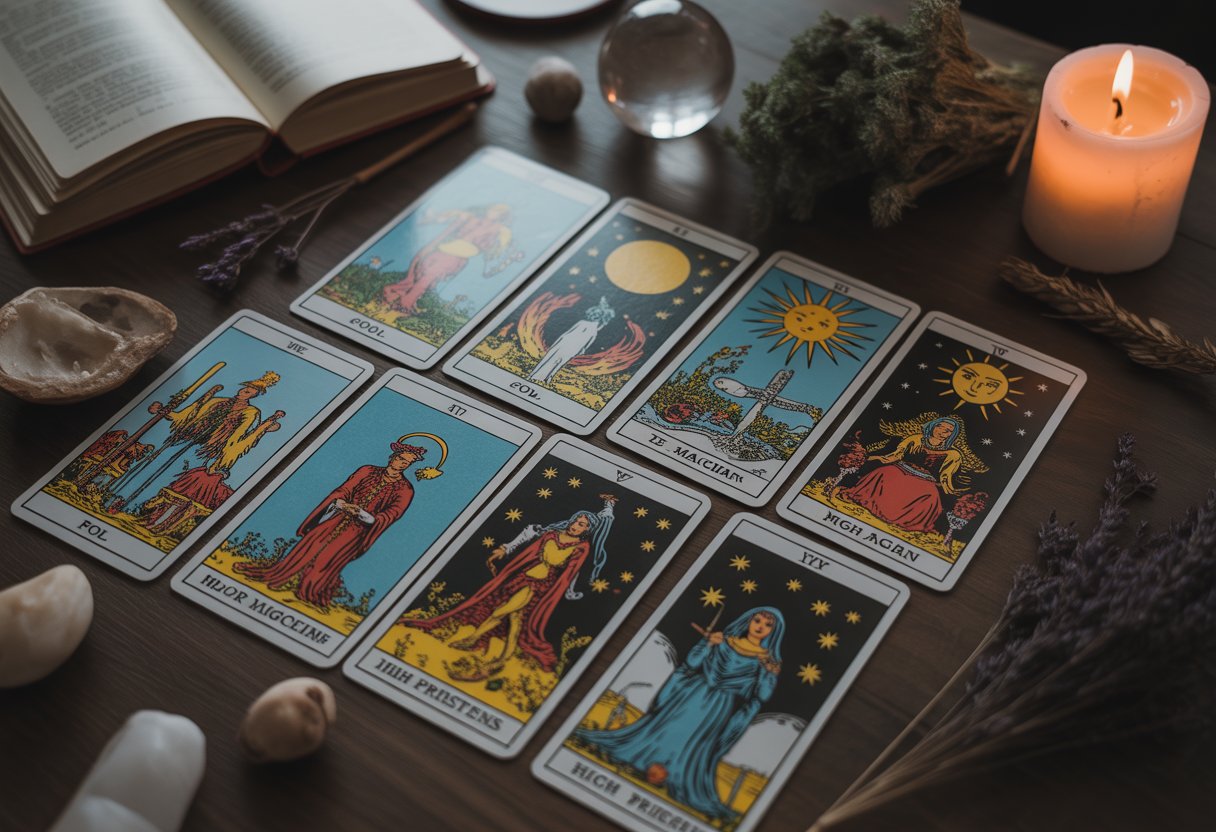
The Major Arcana consists of 22 powerful cards that represent life’s biggest lessons and spiritual growth. These cards carry deeper meaning than their Minor Arcana counterparts and often signal major life events or inner transformations.
Overview of the Major Arcana
The 22 Major Arcana cards represent significant life events and archetypes, forming the spiritual backbone of any tarot deck. I think of these cards as the most important messengers in a reading.
Each card tells part of a larger story called the Fool’s Journey. This journey starts with The Fool (card 0) and ends with The World (card 21).
The cards include famous images like Death, The Devil, and The Tower. These might sound scary, but they represent transformation, breaking free from limits, and sudden change.
Key Major Arcana Cards:
- The Fool – New beginnings
- Death – Transformation and endings
- The Tower – Sudden upheaval
- The Devil – Temptation and bondage
- The Hermit – Soul searching
The Major Arcana guides us through stages of growth, transformation and self-discovery. Each card connects to universal human experiences that we all face.
Distinction Between Major and Minor Arcana
The main difference between Major and Minor Arcana lies in their scope and impact. Major Arcana cards deal with big life themes and spiritual lessons.
Minor Arcana cards focus on daily life situations. They cover four suits: Cups (emotions), Wands (creativity), Swords (thoughts), and Pentacles (money and material things).
Major vs Minor Arcana:
| Major Arcana | Minor Arcana |
|---|---|
| 22 cards | 56 cards |
| Life lessons | Daily situations |
| Spiritual growth | Practical matters |
| Major events | Small events |
When I see Major Arcana cards in a reading, I know the situation has deeper meaning. These cards suggest that important life changes are happening or needed.
Minor Arcana cards help with specific questions about work, relationships, or daily challenges. They provide practical guidance for immediate concerns.
Purpose in Tarot Readings
Major Arcana cards are often considered the most influential and powerful cards in a Tarot reading. When these cards appear, I pay extra attention to their messages.
They highlight the most important aspects of a situation. They point to lessons that need learning or changes that must happen.
In a tarot reading, Major Arcana cards can:
- Show major life transitions
- Reveal spiritual guidance
- Highlight karmic lessons
- Indicate timing of important events
The Major Arcana card meanings are deep and complex, representing archetypal themes that influence our soul’s journey. They connect us to universal patterns of human experience.
When multiple Major Arcana cards appear together, the reading becomes even more significant. This suggests that major forces are at work in the person’s life.
These cards help me understand not just what might happen, but why it matters for someone’s growth and development.
The Fool’s Journey: The Story Behind the Cards
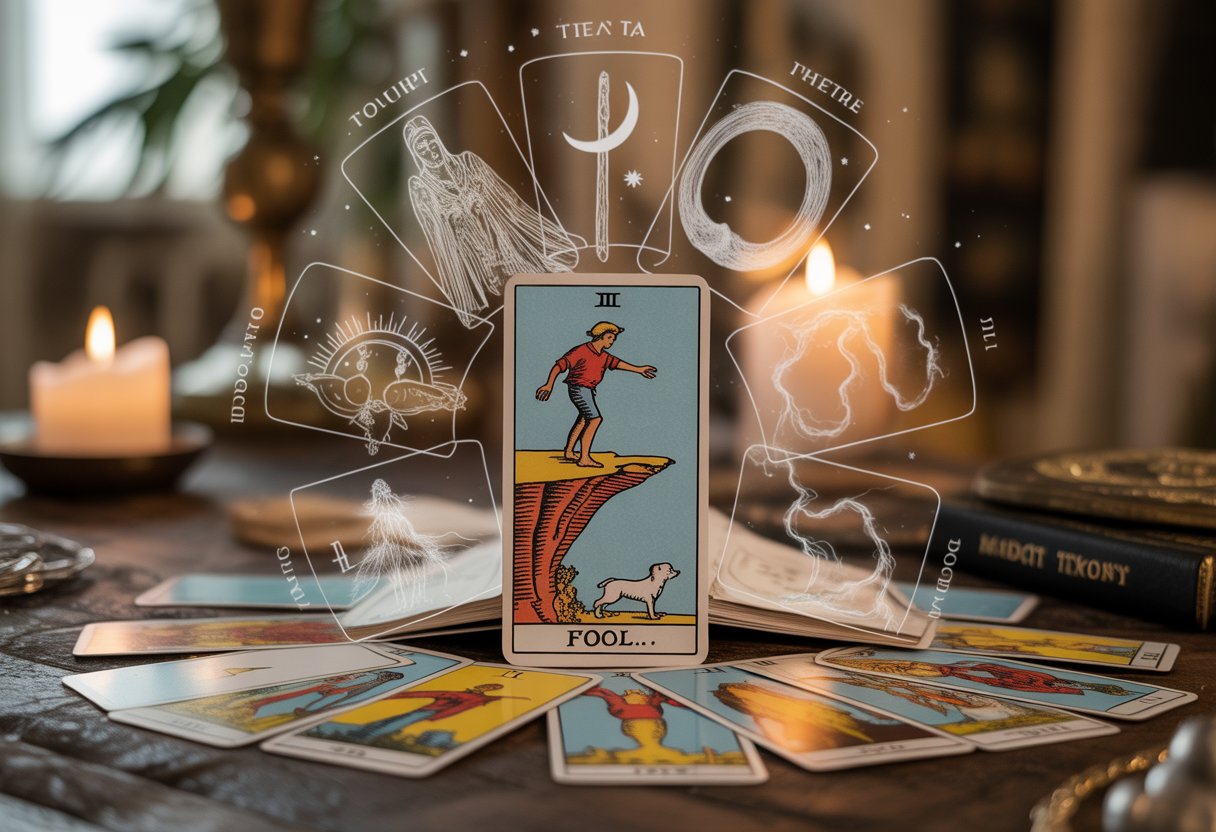
The 22 Major Arcana cards tell a complete story of personal transformation through The Fool’s Journey, where each card represents a specific stage of spiritual growth and self-discovery.
This ancient narrative maps the soul’s evolution from innocent beginnings to complete enlightenment through three distinct phases of awakening.
Concept and Structure of the Journey
The Fool’s Journey is a metaphor for the journey through life, with each Major Arcana card representing a stage that a person must experience to realize wholeness. I find it fascinating that this isn’t just a random collection of mystical symbols.
The journey begins with The Fool (Card 0), who represents pure potential and innocence. This character serves as our guide through all 21 remaining cards.
The Three-Act Structure:
| Stage | Cards | Focus |
|---|---|---|
| Act I | 1-7 | Material world mastery |
| Act II | 8-14 | Inner self-discovery |
| Act III | 15-21 | Spiritual transcendence |
The Fool meets teachers, faces challenges, and learns lessons at each stop. These encounters aren’t accidents but necessary steps for complete spiritual development.
What makes this structure so powerful is its cyclical nature. Once you reach The World (Card 21), the journey can begin again with deeper wisdom.
Spiritual Lessons and Soul’s Evolution
Each card in the Major Arcana represents significant spiritual awakenings and transformative lessons that guide the soul’s evolution. I’ve noticed that these aren’t surface-level meanings but profound archetypal truths.
The spiritual lessons unfold in a specific order. You can’t skip steps or rush the process.
Key Spiritual Themes:
- Balance and duality (High Priestess, Justice, Temperance)
- Power and responsibility (Magician, Emperor, Strength)
- Death and rebirth (Death, Tower, Judgment)
- Integration and wholeness (Hermit, World)
The soul’s evolution happens through both light and shadow work. Cards like The Devil and The Tower force us to confront our deepest fears and limitations.
These spiritual lessons often appear as challenges or crises in real life. The cards show us that what seems destructive is actually necessary for growth.
The journey teaches that awakening isn’t a single moment but a continuous process of becoming.
Stages of Personal and Spiritual Growth
The Fool’s Journey through the Major Arcana is a powerful narrative that symbolizes personal growth through three distinct stages of development. I see these phases as natural progressions that everyone experiences multiple times throughout life.
Stage One: Worldly Education (Cards 1-7)
This phase focuses on learning how to function in the material world. The Fool develops an ego, learns social rules, and builds practical skills.
Stage Two: Soul Searching (Cards 8-14)
Here, spiritual growth accelerates as the Fool turns inward. This stage involves questioning everything learned in Stage One and discovering personal truth.
The Hermit card perfectly captures this phase of deep self-discovery. You must withdraw from external noise to hear your inner voice.
Stage Three: Spiritual Mastery (Cards 15-21)
The final stage strips away illusions and false beliefs. The Tower destroys what no longer serves, while The Star offers hope and healing.
This progression shows that spiritual growth requires both building up and breaking down. Each stage prepares you for the next level of awakening and personal transformation.
Major Arcana Cards and Their Spookiest Symbolism
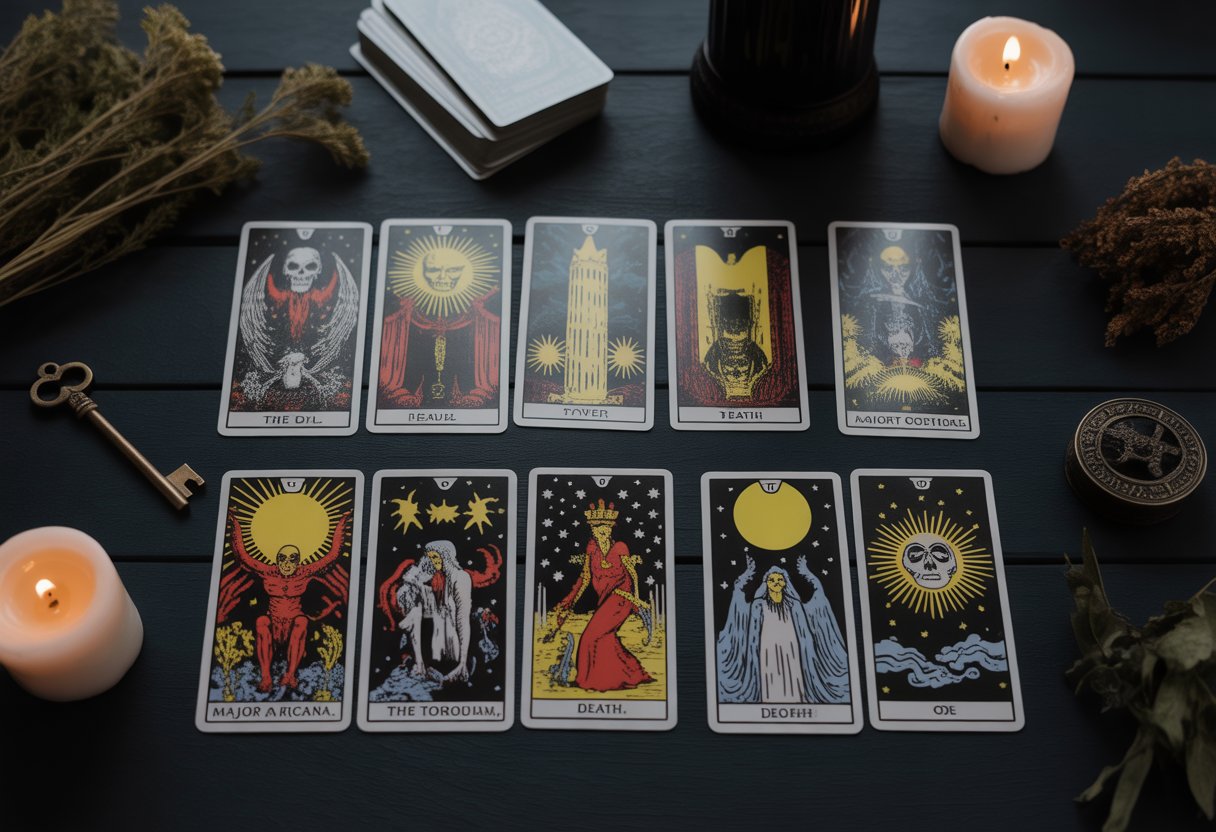
The Major Arcana contains some of tarot’s most haunting imagery, from The Devil’s chains to Death’s skeletal figure. These cards reveal life’s darkest mysteries through symbols of transformation, hidden knowledge, and spiritual awakening.
The Magician to the Lovers: Manifestation and Life-Altering Choices
The Fool starts our journey with an unsettling truth – sometimes we must leap into the unknown without looking back. I find the cliff edge particularly haunting, representing how spiritual awakening often requires abandoning safety.
The card’s white rose symbolizes pure intentions, but the small bag contains unknown mysteries. The fool’s carefree expression masks deeper wisdom about embracing uncertainty.
The Magician channels otherworldly forces through his tools. His upward-pointing wand draws energy from realms beyond our understanding.
The infinity symbol above his head suggests powers that transcend mortal limitations. What makes this card eerie is the magician’s control over all four elements simultaneously.
The roses and lilies around him bloom in a way that feels almost unnatural, hinting at supernatural influence over life and death.
The High Priestess sits between pillars marked with forbidden knowledge. Her crescent moon crown connects her to mysterious lunar cycles and hidden feminine power.
The pomegranates behind her symbolize secrets that can only be accessed through intuition. The veil decorated with palms and pomegranates conceals ancient wisdom.
Her scroll marked “TORA” contains laws that govern both seen and unseen worlds.
The Empress and The Emperor represent earthly power with darker undertones. The Empress’s wheat field suggests abundance, but also the cycle of growth, harvest, and death that governs all living things.
The Lovers card reveals how major life choices can alter our spiritual path forever. The angel Raphael oversees this sudden change, while the serpent whispers temptations that could lead to either enlightenment or downfall.
The Chariot to the Hermit: Inner Strength and Solitude
The Chariot shows a warrior controlling opposing forces – black and white sphinxes that represent our light and shadow selves.
The canopy above displays stars that guide through spiritual battles we must fight alone. The charioteer’s armor suggests protection is needed when traveling between different realms of consciousness.
His expression reveals the intense focus required to master conflicting internal energies.
Strength depicts the most haunting form of power – taming the beast within ourselves. The woman’s gentle touch on the lion’s jaw shows how true inner strength comes from confronting our primal nature with compassion rather than force.
The infinity symbol above her head connects this struggle to eternal spiritual cycles. The mountain landscape suggests this battle happens in isolated, sacred spaces where we face ourselves honestly.
The Hermit stands alone on a mountain peak, holding a lantern that pierces supernatural darkness. His isolation isn’t just physical – it represents the lonely journey toward enlightenment that each soul must travel.
The six-pointed star in his lantern contains ancient wisdom that can only be accessed through solitude. His bent posture shows how seeking truth requires humility and patience, even when the path feels endless and cold.
Wheel of Fortune to Death: Change, Justice, and Transformation
Wheel of Fortune spins with strange creatures pulling the strings of fate. The sphinx at the top holds a sword, ready to slice through the threads of destiny.
Hebrew letters spell out divine names, hinting at cosmic cycles we barely grasp. In each corner, angelic beings read ancient texts, as if reminding us that sudden change follows spiritual laws nobody fully understands.
The wheel turns, whether we like it or not. Our desires and fears don’t really matter in the grand scheme.
Justice stands with scales, weighing souls instead of deeds. Her sword slices illusions, exposing uncomfortable karmic truths.
A purple veil hangs behind her, hiding the machinery of cosmic justice. Her crown tells us real judgment comes from something higher than any human authority.
The square on her crown? It points to how spiritual choices play out in everyday life. The symbolism here is pretty blunt, but it works.
The Hanged Man dangles upside-down, caught between worlds. His calm face suggests that surrender, even when it looks like suffering, can bring spiritual awakening.
The tree holding him up has roots in both the earth and somewhere else entirely. His halo glows, marking him as someone transformed by sacrifice.
Death rides a pale horse, unstoppable and indifferent. The skeleton’s armor shows that change can’t be beaten, no matter what.
His black banner, decorated with a white rose, hints that every ending hides a new beginning. Fallen kings and pleading figures? Death doesn’t care about status.
The rising sun in the distance whispers about rebirth and cycles that go way beyond what we see. There’s a strange comfort in that, honestly.
Ever noticed how the skeleton on the Death card looks just like the Grim Reaper? That’s not a coincidence. This deep dive into the Grim Reaper’s history breaks down their shared symbolism and why we’re still obsessed with it.
Temperance to The World: Liberation, Revelation, and Completion
Temperance features an angel balancing between land and water, pouring liquid from one cup to another. The stream flows upward, defying gravity, like something out of a dream.
A path winds toward distant mountains, stretching the journey toward balance. Her triangle-in-a-square symbol shows spirit needs grounding.
The Devil drags out our worst fears about being trapped. The chained figures below him could walk away if they wanted, but they don’t.
His inverted pentagram and bat wings link him to forbidden knowledge. The torch he holds lights things up, but not always in a way you want.
The Tower comes crashing down with sudden change. Lightning from above shatters false beliefs in an instant.
Falling figures represent parts of ourselves that need to go for growth to happen. The crown tumbling from the top? Ego structures can’t survive real awakening.
The Star comes after the wreckage, promising hope and guidance from above. A woman pours water onto land and back into the pool, keeping the energy moving.
Her nakedness is pure vulnerability, the kind that only comes after losing old defenses. Seven smaller stars circle the main one, nodding to chakras and healing.
The Moon brings out illusions and hidden fears. The path between two towers leads somewhere unknown, where logic just doesn’t cut it.
A lobster crawls out of the water, dragging up stuff from the unconscious. The wolf and the dog howl, wild and tame sides of us both respond to the moon’s pull.
The Sun blazes in with joy, burning away confusion. Its light is almost too much, sometimes blinding us to subtler truths.
A child rides forward, naked and shameless, having integrated what came before. There’s freedom in that, but also a risk of missing something deeper.
Key Themes and Archetypal Energy of the Major Arcana
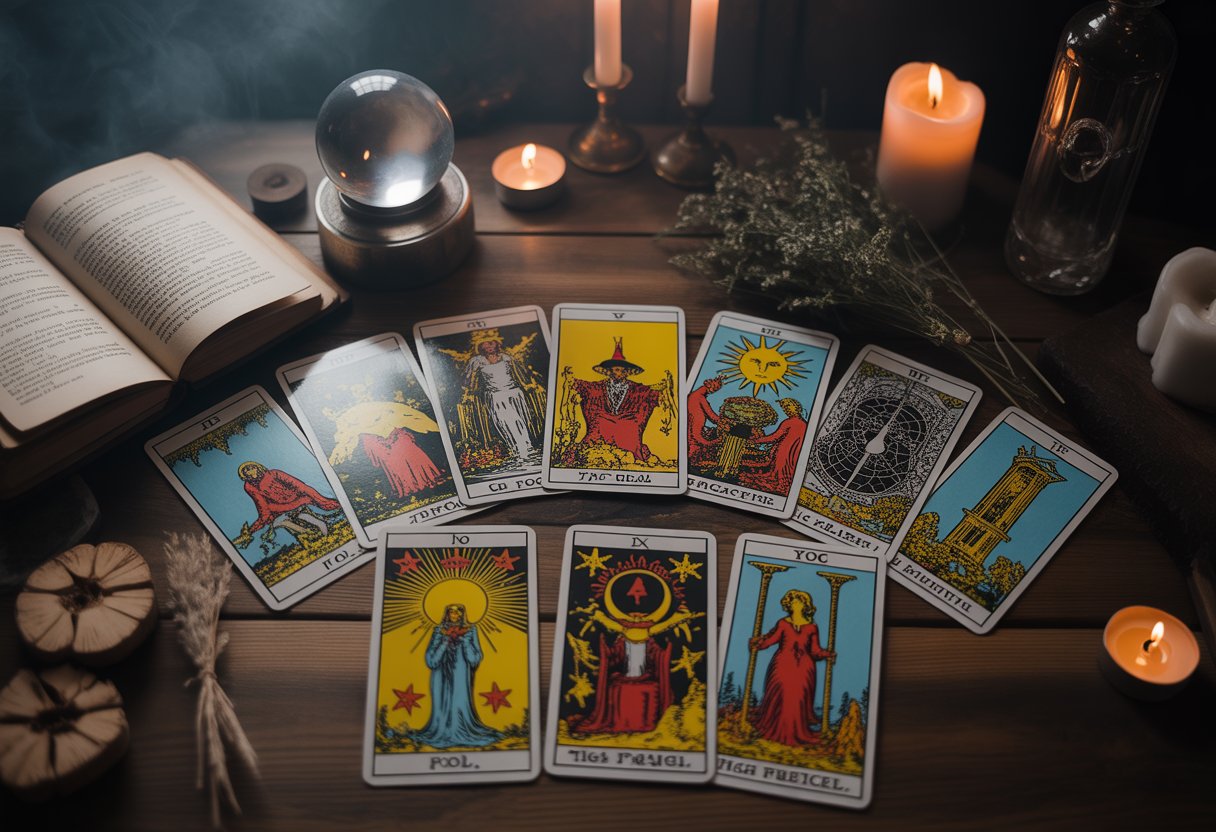
The Major Arcana cards carry archetypal energy that taps into universal human experience. These cards use mystical symbols to explore spiritual themes, guide us toward inner wisdom, and mark big moments of transformation.
Mystical and Spiritual Symbolism
The Major Arcana is loaded with mystical symbols that tie back to ancient wisdom. Each card flashes images like moons, towers, and mythical beasts that point toward deeper truths.
The Death card’s skeleton rider isn’t about literal death. It’s about moving from one phase to another.
The High Priestess sits between pillars, showing the split between conscious and unconscious. These images aren’t meant to be taken literally, and I actually like that.
They point to spiritual concepts that stretch beyond what we see every day. The 22 Major Arcana cards represent archetypal energies that have echoed through human stories forever.
Common mystical symbols include:
- Celestial bodies (sun, moon, stars) for divine guidance
- Religious figures for spiritual authority
- Natural elements to connect us to earth’s cycles
- Sacred geometry for hidden patterns
These symbols bridge the physical and spiritual worlds. Sometimes, they help me make sense of things logic just can’t touch.
Intuition and the Subconscious
The Major Arcana nudges me to trust my gut. So many cards show people with eyes closed or gazing inward, hinting that inner knowing beats external proof.
The High Priestess is the poster child for intuition. She sits quietly, holding wisdom that comes from inside, not from books.
The Hermit walks with a lantern, lighting up the unknown. When I work with these cards, they remind me to listen to dreams and gut feelings.
The Moon card is all about the subconscious and the stuff we hide from ourselves.
Key intuitive themes:
- Trusting first impressions
- Noticing recurring dreams or symbols
- Spotting patterns logic would miss
- Seeing emotions as wisdom
The cards remind me that not everything valuable can be measured. Sometimes, the best advice comes from just sitting quietly and listening.
Transformation and Awakening
Honestly, I see the Major Arcana as a map of spiritual growth. The Fool starts things off with curiosity and new beginnings.
The journey ends with The World, which is all about completion and awakening. In between, there are teachers, challenges, and moments that force deep change.
The Tower card? It’s the shake-up, the crash that breaks old patterns. Death signals the end of what’s holding us back.
Major transformation themes:
- Letting go of old beliefs
- Accepting change, even when it’s scary
- Learning compassion for myself and others
- Spotting patterns that need to shift
The Major Arcana deals with life-changing events that stick with you. Each card brings its own lesson about waking up and becoming more aware.
They aren’t just about telling the future. They help me see where I am and what I might need to work on next.
Decoding Spooky Symbolism: Hidden Messages and Imagery
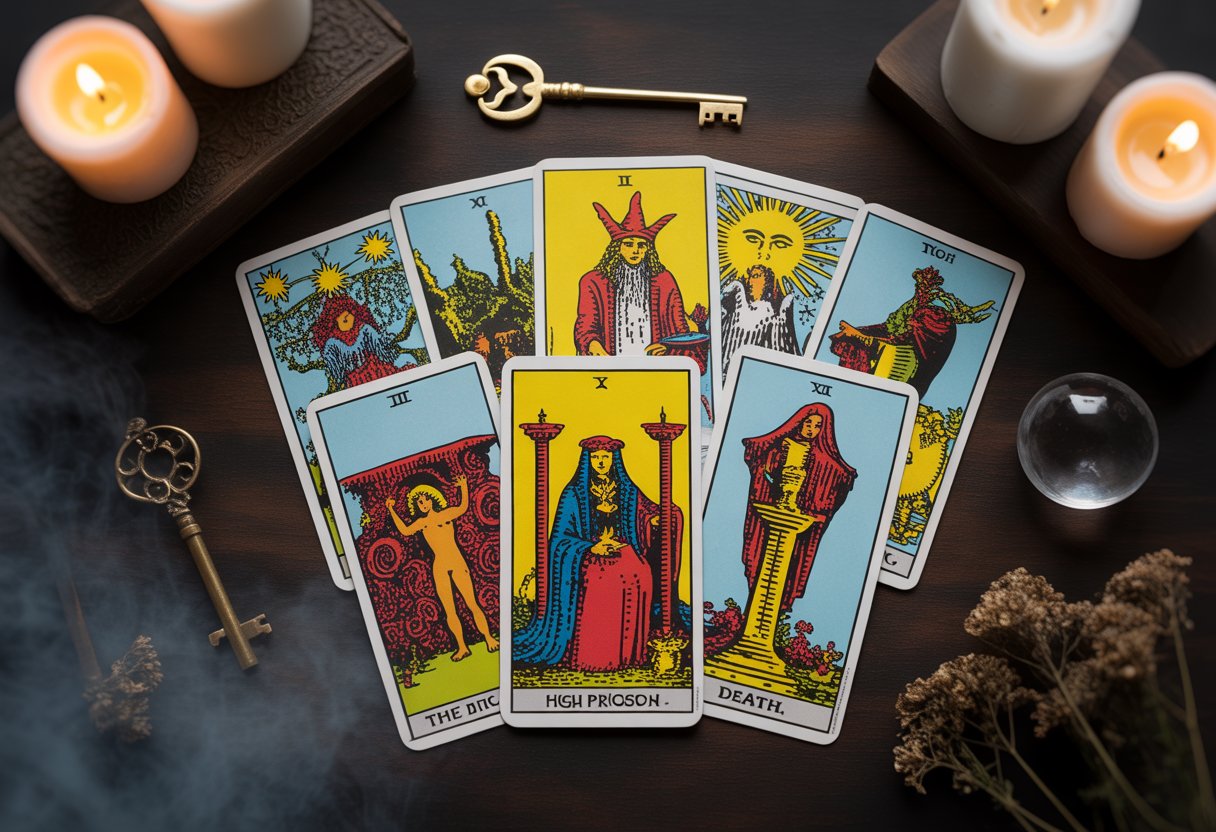
Major Arcana cards are packed with symbols that dig into death, transformation, and the shadow self. These images borrow from old traditions like Kabbalah and use dark themes to show life’s biggest changes.
Common Symbols and Their Meanings
Certain symbols just keep popping up in the spookier Major Arcana cards. They each have a job in telling the story.
Skulls and bones show the end of one thing and the start of something else. In the Death card, the skeleton isn’t about literal death, it’s about transformation and renewal.
If you’re into skull figures and spooky aesthetics, this hand-picked skeleton merch list will be right up your alley.
Chains and bondage show up in The Devil. The chains are loose, meaning we could break free if we really wanted.
Dark waters hint at the unconscious and feelings we haven’t dealt with. When these show up, I know there’s something under the surface.
Falling towers and lightning mean sudden change that wipes out old stuff. Sometimes, you need a little destruction to move forward.
Eclipses and dark moons point to times when the usual rules don’t apply. It’s unsettling, but it leads to new understanding.
Influence of Kabbalah and Other Traditions
The Major Arcana borrows a lot from Kabbalah and other mystical traditions. These influences shape how I see the darker cards.
The Tree of Life from Kabbalah maps onto the tarot’s journey. Each card teaches a lesson, and the path goes through both light and shadow.
Hebrew letters connect to specific cards, adding layers of meaning. They stand for different kinds of divine energy.
Astrological symbols show up all over. The Devil card ties to Capricorn, which is about earthly temptations.
Alchemical imagery pops up to show transformation. Metals change in fire, and so do we through tough times.
Hermetic principles say opposites need each other. Light needs darkness, joy needs sorrow.
Iconography of Darkness, Change, and Illusion
The darkest Major Arcana cards use certain images to show life’s roughest transitions. I find these symbols stick with me the most.
Veils and curtains hide what we’re not ready to see. The High Priestess sits behind a veil, hinting at secrets that take work to uncover.
Mirrors and reflections show reality can be twisted. They remind me to look deeper.
Crossroads and doorways mean choices and big changes. They show up when it’s time to pick a path.
Fire and destruction clear out what’s old. The Tower card is the clearest example, with its lightning strike.
Inverted symbols mean hidden or reversed meanings. An upside-down pentagram isn’t evil; it’s about being cut off from spiritual values.
Shadow figures are the parts of us we’d rather ignore. The Devil card makes us look at these sides of ourselves.
Using Major Arcana Symbolism for Tarot Reading and Self-Discovery
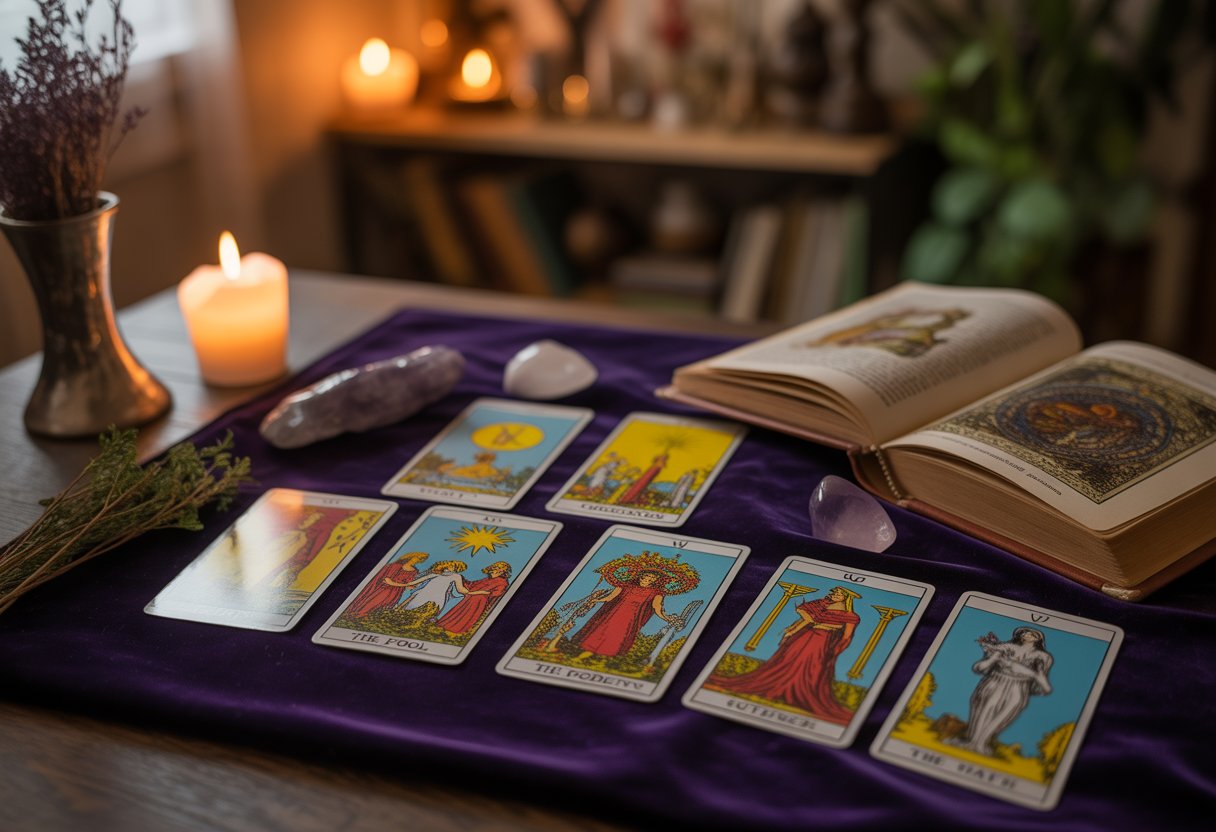
Major Arcana cards pack a punch with their symbols. They can totally shift your tarot practice and help you dig deeper into yourself.
Reading Techniques and Interpretation
When I read Major Arcana cards, I go for the layers of meaning, not just the textbook definitions. Each card’s got a bunch of symbols that hit different parts of life.
I look at the colors, numbers, and figures. The High Priestess sits behind a veil with pomegranates, hidden knowledge and fertility. Death’s black flag with a white rose? That’s transformation.
How I make sense of the cards:
- Spot repeated symbols
- Check the card’s spot in the Fool’s Journey
- Notice elemental and astrological links
- Trust gut reactions to the images
Card orientation matters, too. Upright cards usually mean external stuff or conscious awareness. Reversed cards? They’re about inner work, shadow issues, or resisting change.
The Major Arcana represents universal themes and turning points that deserve more time and thought than the Minor Arcana. I like to sit with these cards longer during readings.
Patterns and Major Arcana Dominance in Spreads
When you get a bunch of Major Arcana cards in a spread, it’s a sign. Big life themes and spiritual lessons are at play.
If Major Arcana dominates, here’s what I watch for:
| Number of Cards | Meaning |
|---|---|
| 3-4 cards | Important life phase or spiritual awakening |
| 5+ cards | Major life transformation or karmic lessons |
| All Major Arcana | Destiny or soul purpose guidance |
I pay attention to which archetypes show up together. The Magician and High Priestess? That’s about balancing action and intuition. The Tower followed by The Star means hope after chaos.
Sequential numbers tell a story, too. The Fool’s Journey starts with cards 0-7 (material lessons), moves through 8-14 (inner growth), and ends with 15-21 (spiritual mastery).
If a spread is missing certain numbers, that says something. No early cards could mean skipping basics. Missing middle cards? Maybe avoiding self-reflection.
Harnessing Symbolism for Spiritual Growth
I use Major Arcana symbolism as daily meditation tools for self-discovery. Each card brings its own spiritual lesson and a chance to grow.
The Hermit encourages me to seek wisdom through solitude. I focus on his lantern symbol when I need some inner guidance.
The Hanged Man reminds me that surrendering control can open up new perspectives. Sometimes, that’s a tough lesson to swallow, but it’s always worth considering.
My daily practice includes:
- Drawing one Major Arcana card for morning reflection
- Journaling about how I personally connect to that card’s symbols
- Figuring out which archetype I might need to embody today
- Using card imagery in visualization exercises
I work with challenging cards like The Devil and The Tower as shadow work tools. These archetypal symbols help unlock personal and spiritual insights about my fears and limiting beliefs.
The World card always reminds me that spiritual growth isn’t a straight line. I find myself coming back to earlier lessons, but each time with a little more understanding.
Tracking which Major Arcana cards pop up a lot in my readings shows me ongoing life themes and areas that might need some attention.
Frequently Asked Questions
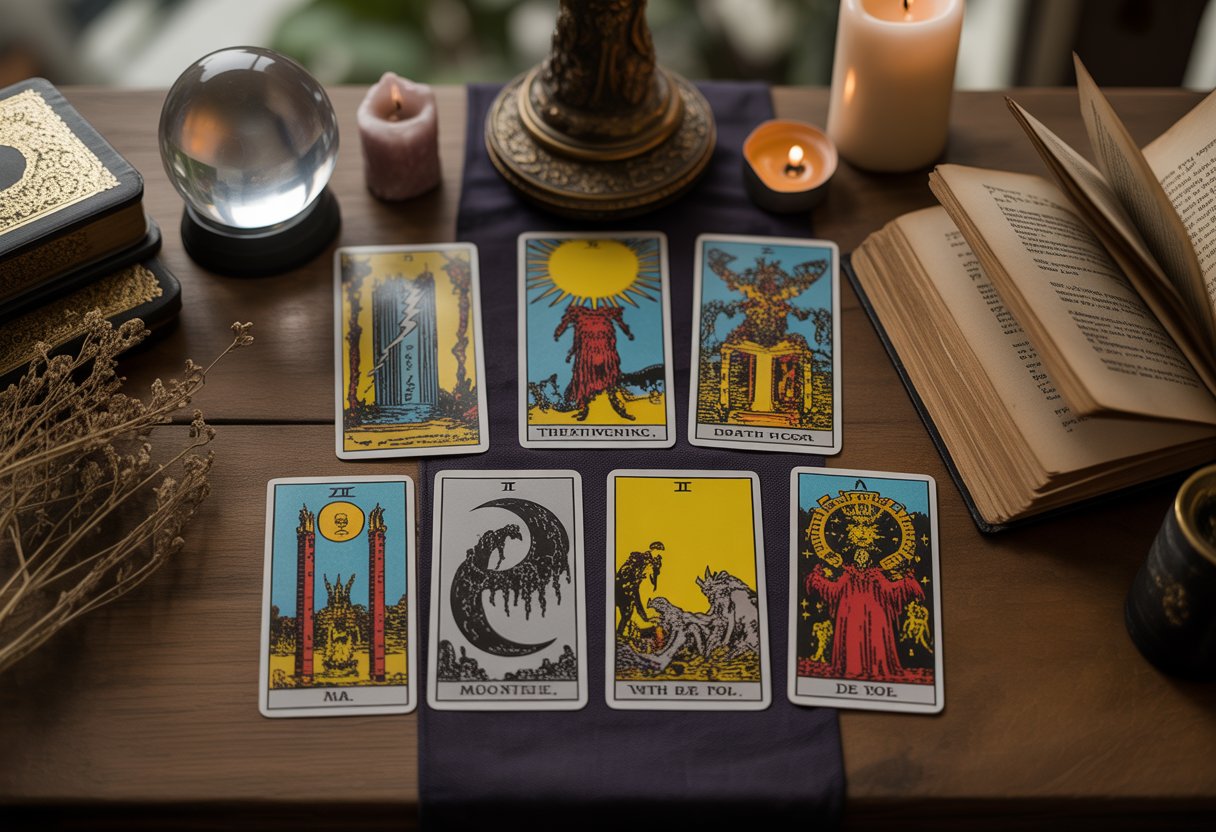
The most mysterious cards in tarot spark the biggest questions about what they really mean. These darker symbols, in my experience, actually offer profound insights into transformation and inner wisdom, rather than just doom and gloom.