
*This post may contain affiliate links for which I earn commissions.*
Your vintage horror movie posters, signed Stephen King novels, and rare monster figurines deserve more than just sitting on a dusty shelf. Proper care and storage can mean the difference between a collection that holds its value for decades and one that deteriorates within just a few years.
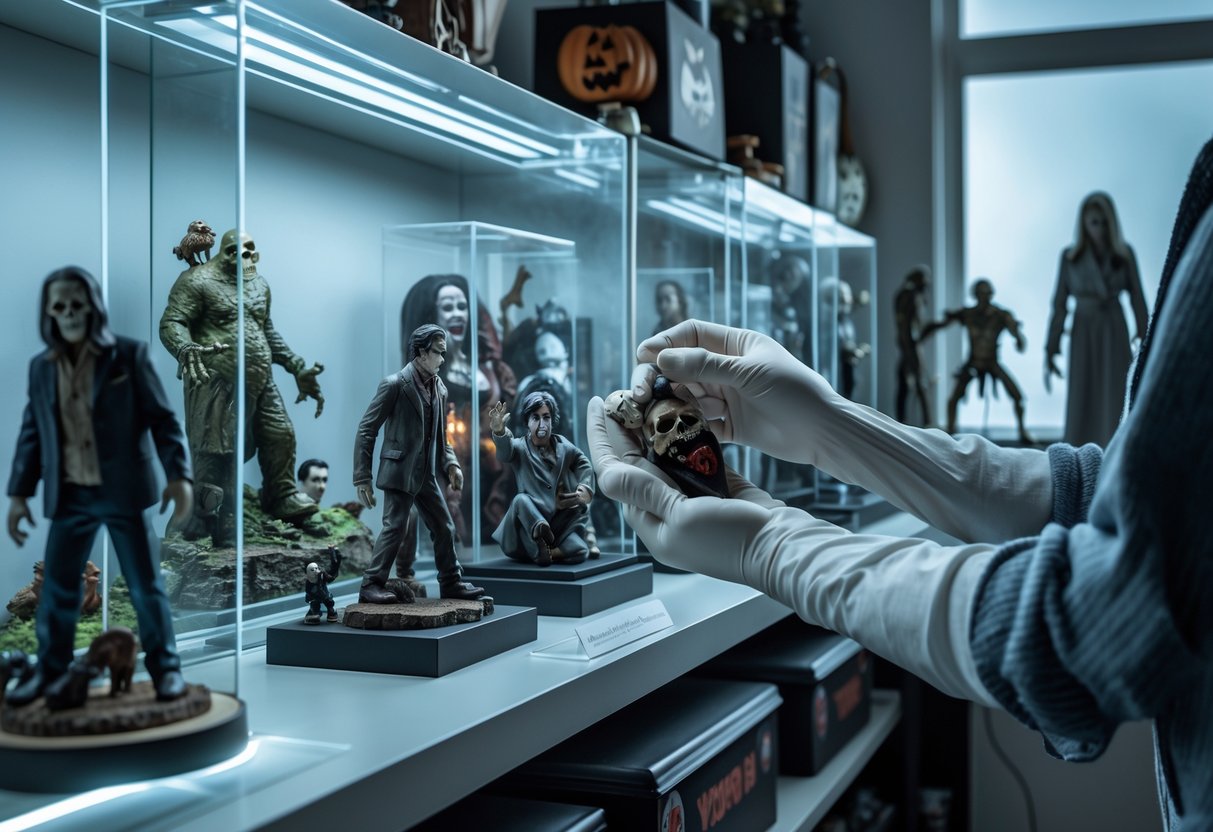
The key to preserving horror collectibles? You need to control temperature, humidity, and light exposure, and use acid-free storage materials with gentle handling. Whether you’re into classic Universal monster memorabilia or the latest horror game collectibles, the basics stay pretty similar.
I’ll walk you through what makes horror items valuable and how to create a storage environment that shields them from threats like moisture, fading, and pests. You’ll also find out how to display your favorites without risking their condition, and keep them in shape for years.
Understanding the Value of Horror Collectibles
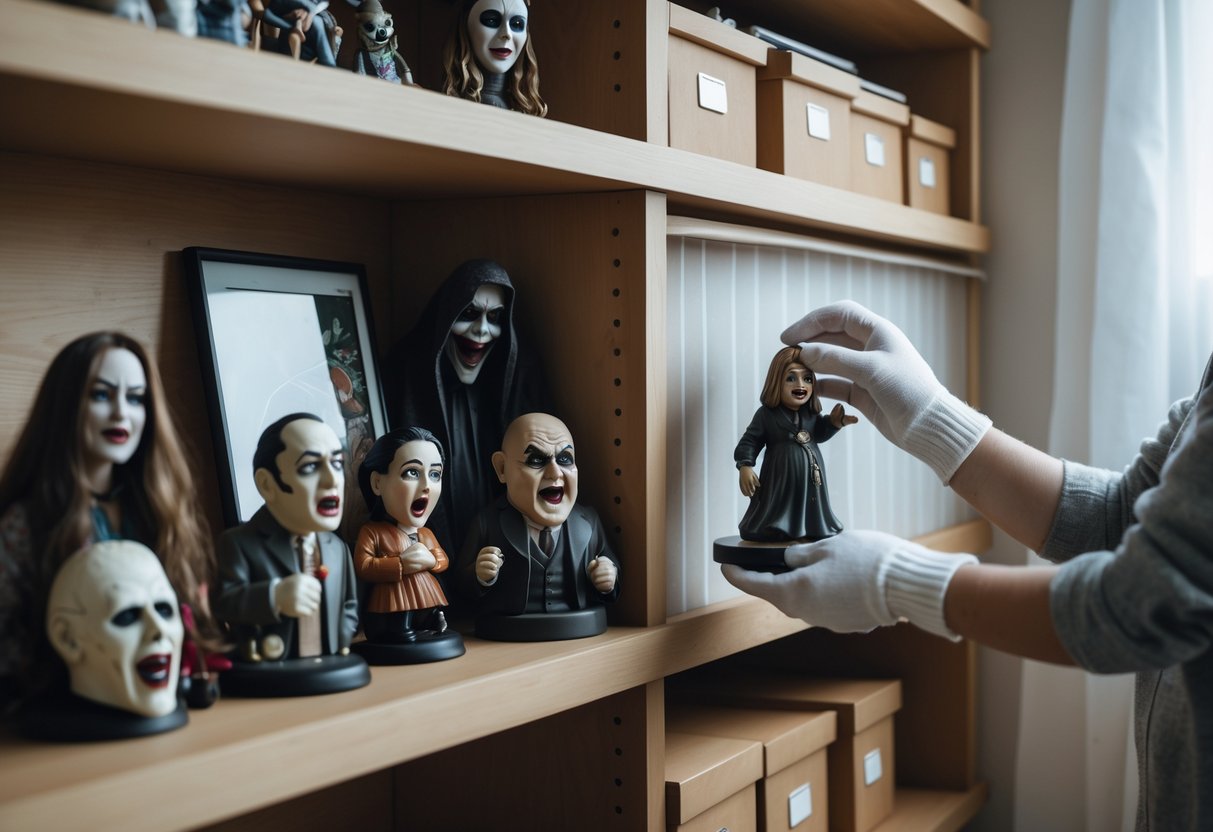
Horror collectibles have value thanks to their history, money-making potential, and the quirky appeal of different item types. Each one tells a story and might even grow in worth if you’re lucky.
Historical and Cultural Significance
Horror collectibles connect us to big moments in entertainment history. Think of movie posters from Psycho or The Exorcist, they mark real turning points in cinema.
These pieces show the cultural impact of horror. Like, a first-edition Stephen King novel? That’s a snapshot of how one author changed the whole genre.
Key Historical Values:
- Original movie props from famous films
- First-run promotional materials
- Items from groundbreaking horror TV shows
- Memorabilia from influential directors
Collecting from specific eras creates a time capsule of horror’s evolution. The 1980s slasher wave brought a totally different vibe than today’s psychological horror.
Vintage toys like monster figures from the 1960s show how horror crept into mainstream culture. Horror comics reveal the genre’s expansion beyond movies.
Monetary Worth and Investment Potential
Horror collectibles can serve as investments that grow in value as they get harder to find.
Several factors affect value:
| Factor | Impact on Value |
|---|---|
| Rarity | Higher rarity = higher value |
| Condition | Perfect condition worth much more |
| Age | Older items often more valuable |
| Popularity | Famous movies/characters worth more |
I recommend getting collectibles appraised by experts to really know what you have. Pros look at rarity, condition, and history.
Limited editions and signed pieces by actors or directors usually fetch more. Comic books in mint condition from horror’s golden age? Those can go for thousands.
Unique Categories: Figures, Posters, Books, and More
Different horror collectibles follow their own value patterns. Movie posters from original releases almost always beat out reprints.
Action figures and toys from series like Friday the 13th or Halloween pull in horror fans and toy collectors alike. Mint-in-package figures? Those are gold.
Books and comics get pricier with first editions and special printings. A signed first edition of a classic horror novel can be a real prize.
Movie props and costumes are the holy grail for some collectors. Even tiny props from famous films can be shockingly valuable.
Lately, new categories keep popping up. Video game memorabilia and streaming exclusives are getting popular among younger fans. For an experience-based pick that still scratches the collector itch, explore nostalgia-packed horror movie night bundles.
Each type needs its own storage and care routine. Posters hate light and moisture, while figures prefer stable temperatures.
Fundamental Principles of Collectible Care
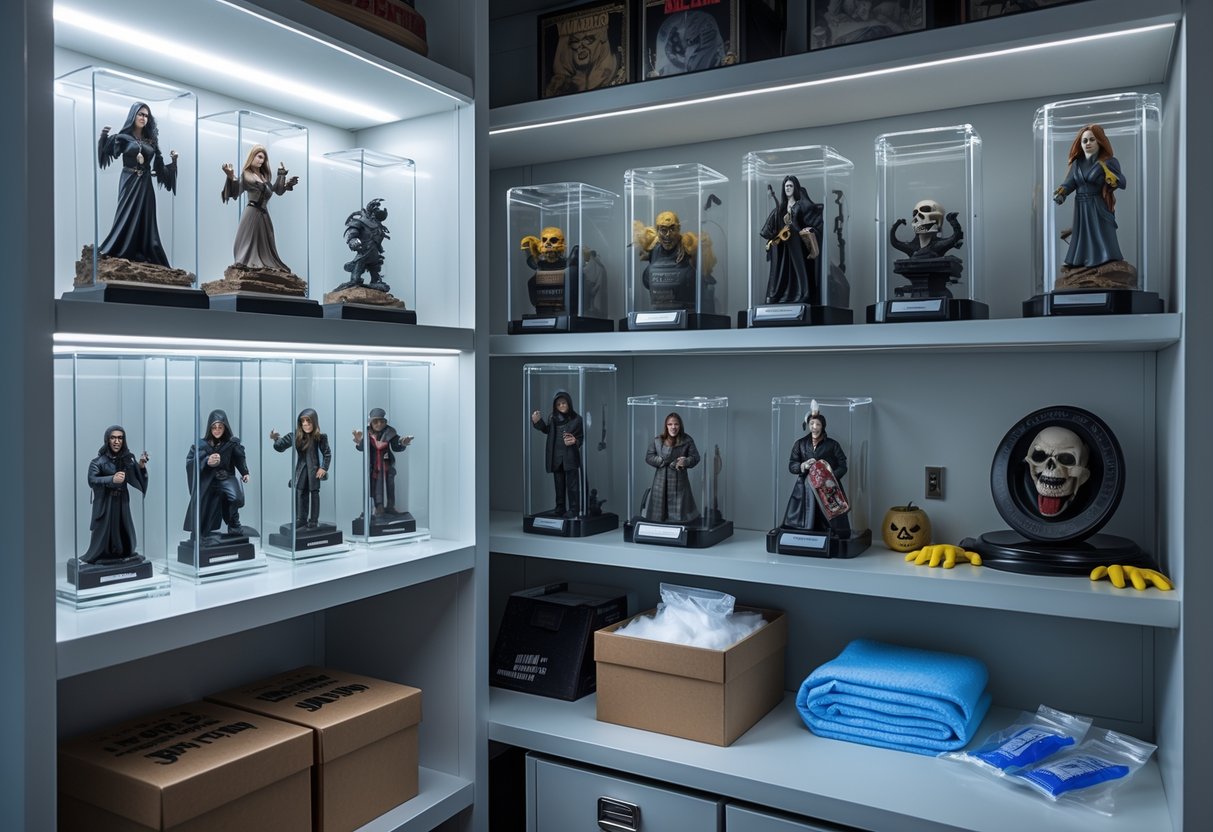
Proper storage, gentle handling, and environmental protection are the basics for keeping your horror collectibles safe. Regular checkups help you catch issues before they become disasters.
Importance of Gentle Handling
I always handle my horror collectibles with clean, dry hands or cotton gloves. That way, I keep skin oils off the surfaces.
When I move things, I support them from underneath instead of grabbing edges or sticking-out parts. Action figures get lifted by the torso, not by fragile limbs.
Key handling rules I stick to:
- Never force stuck joints or moving parts
- Use both hands for larger items
- Keep food and drinks far away
- Store fragile stuff separately
I check over each piece before and after handling. Vintage items can be surprisingly brittle, so I try to go slow.
For comics and posters, I use backing boards and touch them as little as possible. Less handling means better preservation.
Avoiding Direct Sunlight and Humidity
Sunlight is a killer for colors and materials. I keep my collection away from windows and bright lights.
UV rays do the worst damage. Even indirect sunlight through glass can wreck items over time.
Environmental factors I control:
- Temperature: 65-70°F, steady
- Humidity: 45-55%
- Light exposure: as little UV as possible
- Air circulation: gentle, filtered
I use blackout curtains and stick to LED lights because they’re cooler and give off less UV than fluorescents.
Basements and attics are risky because of humidity swings. I store my stuff in climate-controlled rooms instead.
Moisture leads to mold, rust, and warping. Silica gel packets in storage bins help, and I check humidity monthly with a hygrometer.
Overview of Long-Term Preservation
Proper storage techniques call for acid-free materials if you want things to last. Regular boxes have acids that slowly destroy your collectibles.
I go for archival-quality supplies. Acid-free boxes, tissue, and plastic sleeves cost more, but they’re worth it.
My storage system:
- Acid-free boxes
- Polyethylene or polypropylene bags
- Museum-quality display cases
- Cedar blocks for pest control
I check stored items every six months for any signs of trouble.
I photograph each item and jot down its condition before packing it away.
Climate control systems keep things steady, which is better than just tossing in a dehumidifier. Consistency helps prevent materials from expanding and contracting.
I rotate what’s on display to limit light exposure. Permanent displays tend to suffer more damage than items kept in the dark.
Optimal Storage Solutions for Horror Collectibles
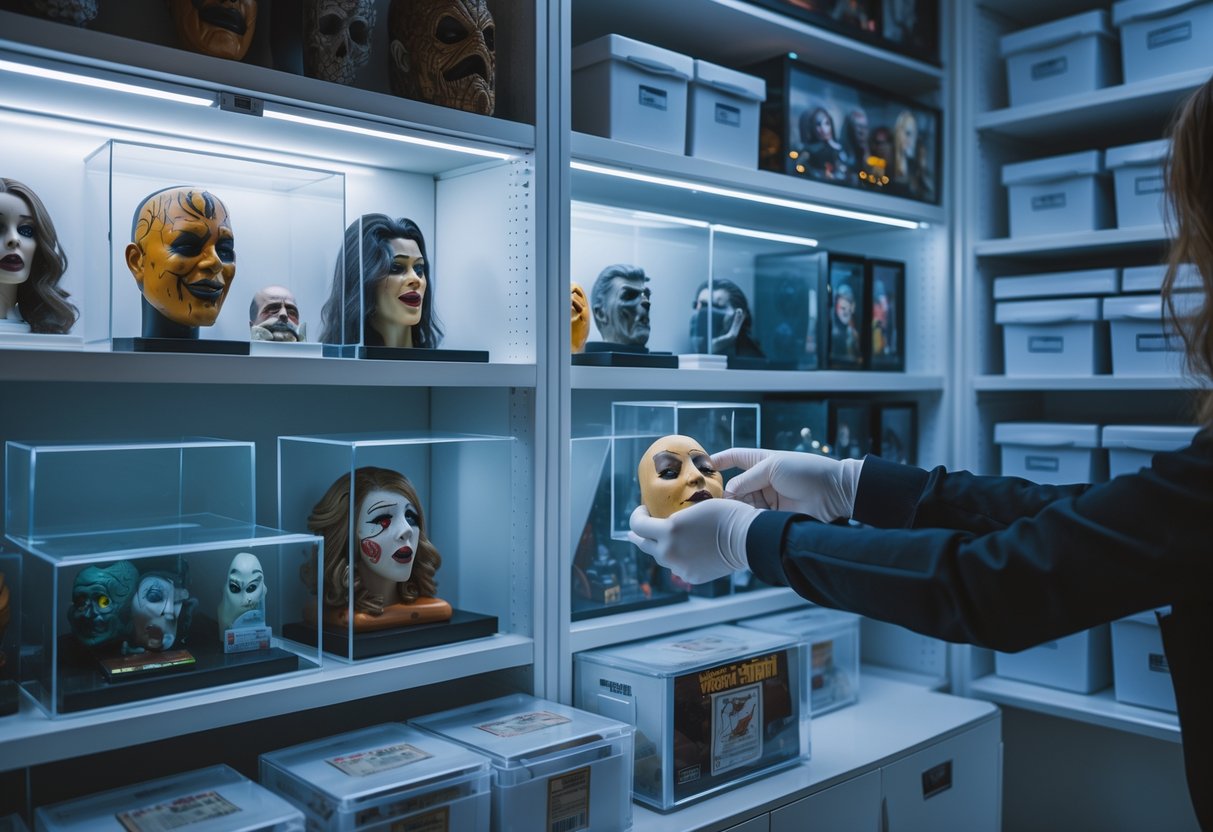
Picking the right storage container can save your collection from falling apart. Different horror collectibles need their own storage approach, depending on what they’re made of and how fragile they are.
Choosing Storage Containers: Plastic, Archival, or Acid-Free Boxes
I recommend acid-free materials for most horror collectibles. They stop harmful chemicals from breaking down your items.
Acid-free boxes are perfect for paper stuff like horror magazines and posters. They keep things stable and safe.
Archival-quality storage bags work well for rare comics and trading cards. I use these for my best pieces.
Plastic containers can be good, but choose carefully. Some plastics release chemicals over time. Clear bins let you see your collection without opening everything.
| Container Type | Best For | Key Benefits |
|---|---|---|
| Acid-free boxes | Papers, magazines | Chemical-free protection |
| Archival bags | Comics, cards | Individual item protection |
| Quality plastic | Figures, small items | Visibility and durability |
Skip cardboard boxes from moving companies. They usually have acids that can wreck your collectibles.
Specialty Storage for Paper and Books
Horror comics need special care to stay crisp. I always put each comic in an acid-free sleeve with a cardboard backing.
Store comics upright in comic boxes, not stacked flat. This helps them keep their shape.
Magazines and movie programs should go in acid-free folders and stand upright on shelves.
For valuable items:
- Use museum-quality sleeves
- Add extra cardboard backing
- Store in climate-controlled rooms
- Keep out of direct light
Humidity is a nightmare for paper. Too much moisture brings mold and warping, while too little makes pages crack.
I keep paper collectibles separate from other stuff so I can control their environment more easily.
Storing 3D Items: Figures, Statues, and Toys
Keep vintage toys and figures in their original packaging if you can. It really helps their value.
For loose figures, I wrap each one in acid-free tissue to avoid scratches and broken parts.
Storage tips for 3D collectibles:
- Use padded dividers between items
- Heavier pieces go on bottom shelves
- Keep moving parts in neutral positions
- Wrap fragile pieces on their own
Don’t store plastic toys next to vinyl or rubber. Some plastics react and can cause damage.
Big statues need sturdy shelves and dust protection. I cover mine with cotton cloths instead of plastic bags.
If you’re storing boxed items, keep them off the floor and away from walls to avoid moisture. Raised shelves work best.
Environmental Controls and Damage Prevention
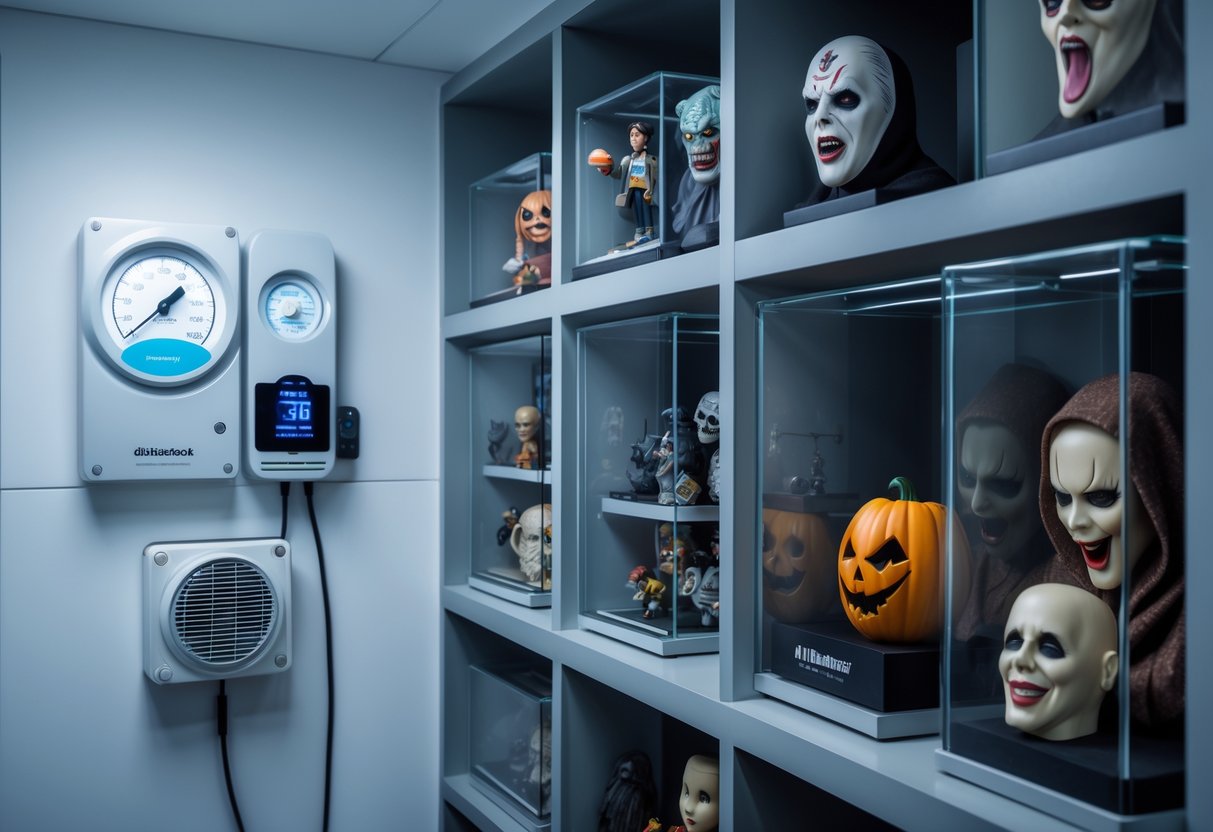
Horror collectibles face constant threats from temperature swings, moisture, and light. Let’s talk about how to set up the right environment and protect your stuff from these sneaky dangers.
Using Climate-Controlled Environments
Climate-controlled spaces are your best bet for fighting environmental damage. I store my horror collectibles in rooms with stable temperature and humidity, not in basements or attics.
Basements get damp, and attics turn into ovens in summer. Both can ruin your collection.
A spare bedroom or closet inside your home usually works better. These spaces stay more consistent year-round.
If you have to use a basement or garage, get a dehumidifier and a climate control unit. It’s not cheap, but it helps.
Climate-controlled storage units are another solid choice. Many keep temps between 55-75°F and humidity at 30-50%.
Maintaining Ideal Temperature and Humidity Levels
Temperature and humidity can either protect or destroy your collectibles. Fluctuations cause warping, discoloration, and breakdown.
I keep my horror collectibles at:
- Temperature: 65-70°F
- Humidity: 45-55%
High humidity brings mold and mildew. Low humidity makes things brittle and likely to crack.
I use a digital hygrometer and check it weekly.
Silica gel packets pull extra moisture from display cases. I swap them out every few months.
Don’t keep items in sealed plastic bags because they trap moisture and set up mold problems.
Shielding from Light and UV Exposure
Light fades colors and weakens materials. Sunlight is the worst offender for horror collectibles.
I keep my most valuable pieces away from windows. Even indirect sun can do damage over time.
UV-protective glass blocks harmful rays but still lets you show off your collection. It’s pricier, but it works.
LED lights are my go-to for display cases since they don’t get as hot or pump out much UV.
I keep light levels low unless I’m showing someone the collection.
Acid-free paper is great for wrapping delicate items. Regular paper can stain or hurt your collectibles.
Store items in the dark when you’re not displaying them. Darkness is honestly the best defense against light damage.
Packing and Protection Best Practices
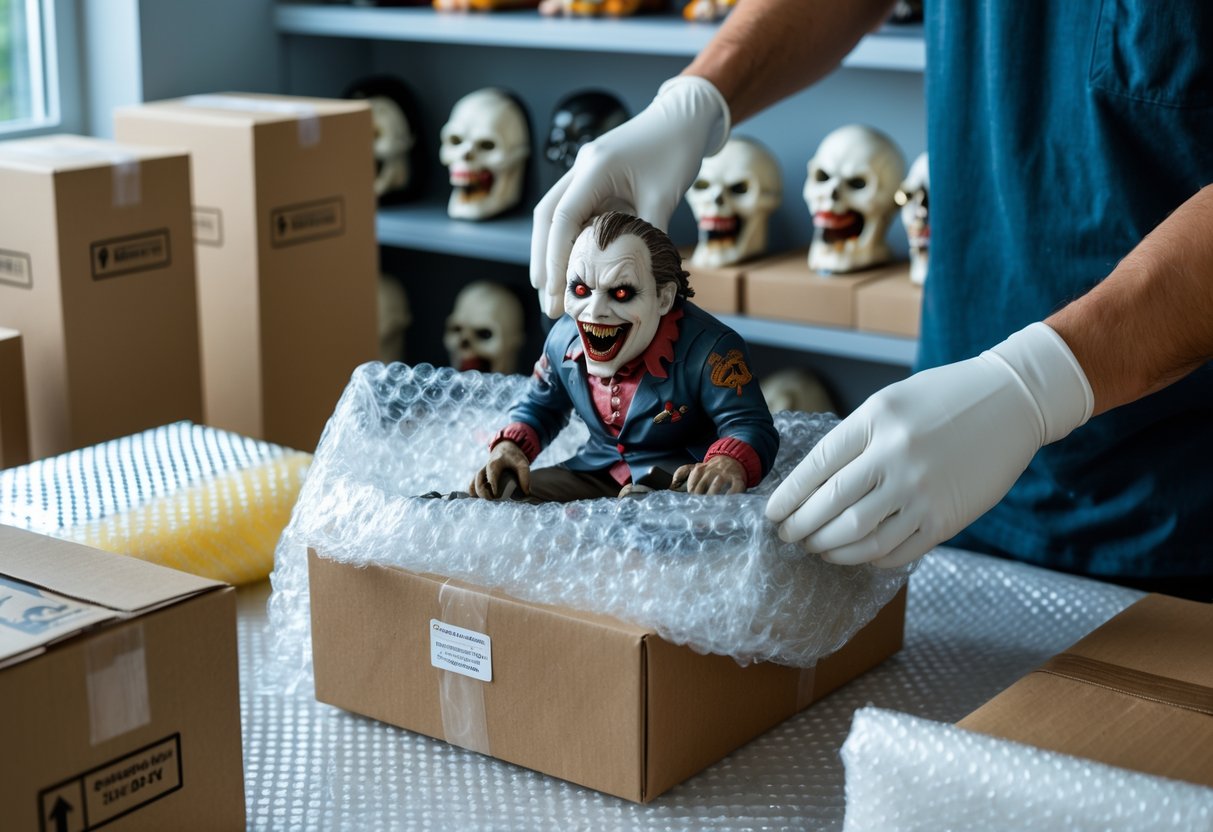
The right packing materials make all the difference for horror collectibles. Acid-free supplies, careful layering, and some pest prevention can really keep your collection safe.
Acid-Free Packing Materials and Bubble Wrap Usage
I always reach for acid-free tissue paper when packing my horror stuff. Regular tissue paper can yellow and damage things over time, so I just don’t risk it.
For fragile pieces like old posters or delicate figures, I start with acid-free tissue. After that, I add a layer of bubble wrap for some extra cushion.
A few things I always keep on hand:
- Acid-free tissue paper
- Archival bubble wrap
- Acid-free storage boxes
- pH-neutral packing tape
When I use bubble wrap, I make sure the bubbles are facing out, not touching the item. The smooth side goes against the collectible to avoid marks.
I never use newspaper or regular tissue. Those just cause headaches down the line, like yellowing, stains, all that.
Layering with Tissue and Avoiding Overcrowding
I always create layers when packing collectibles. First, acid-free tissue goes right against the item to keep out moisture and reduce handling damage.
For action figures, I wrap each piece, including arms, legs, and accessories, separately. Scratches and paint chips are way less likely this way.
My go-to layering:
- Acid-free tissue (touching the item)
- Bubble wrap (for cushion)
- More tissue on the outside
I avoid packing things too tightly. Crowding leads to pressure damage and makes it a pain to get to specific pieces.
I leave at least two inches between each item in storage boxes. That way, nothing gets crushed, and air can circulate. Proper storage techniques really do help with long-term value.
Pest and Dust Prevention Techniques
I seal storage containers completely to block out dust and pests. Dust scratches surfaces and settles in places you can’t easily clean.
For pests, I toss in cedar blocks because they’re chemical-free and bugs hate them. I swap these out every six months or so.
My checklist:
- Airtight containers
- Cedar blocks or lavender sachets
- Routine inspections
- Climate control
I check on my collectibles every three months. If there’s a problem, I want to catch it early.
Silica gel packets are a must for controlling moisture. I put one in each box to keep things dry and fend off mold.
Displaying Your Horror Collectibles Safely
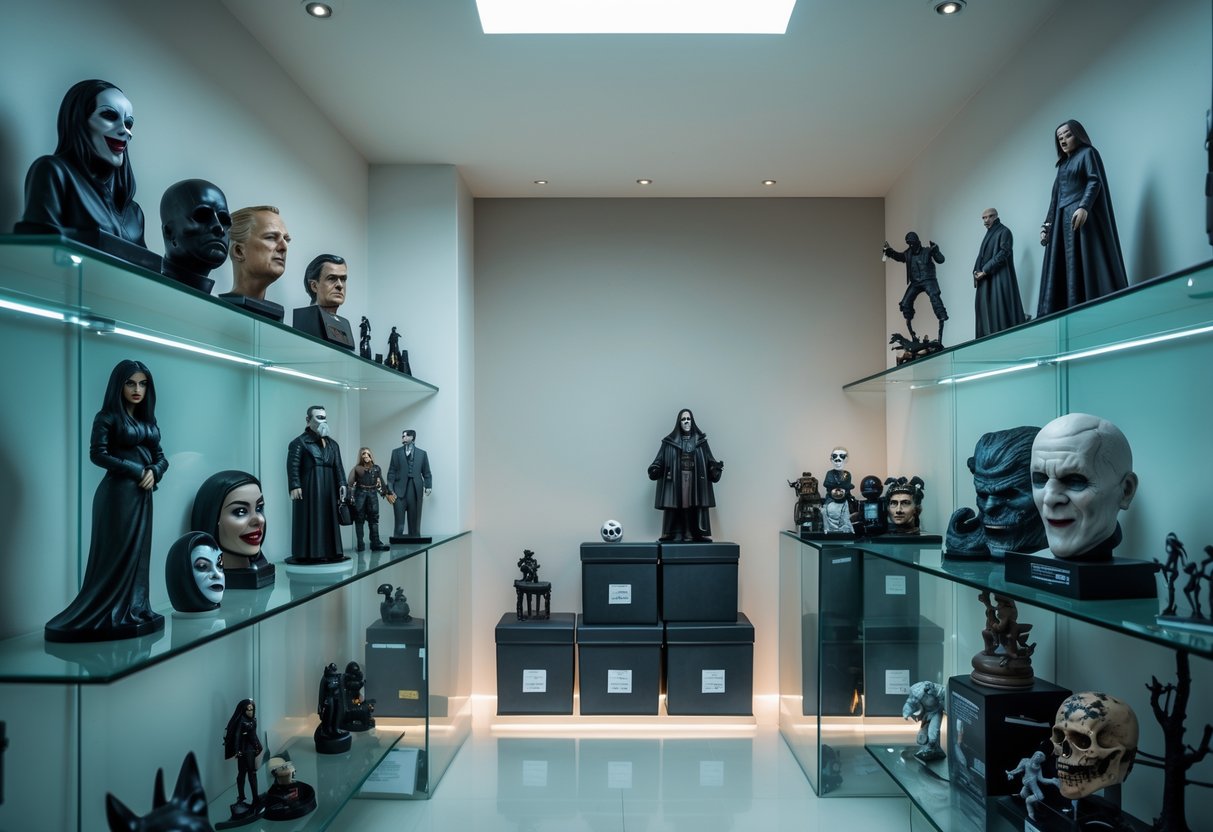
When I display my horror collectibles, I want them safe but still visible. The right display, good placement, and UV protection go a long way.
Display Cases versus Open Shelving
Display cases are my top pick for valuable horror items. They keep out dust, moisture, and, honestly, curious fingers.
I use glass or acrylic cases for signed photos, rare figures, or old posters. Quality storage solutions with tight seals are great for high-value stuff.
Open shelving works for sturdier things I handle often, such as books, action figures, and plastic pieces. Rearranging is easier, and I can create themed displays.
Why I like display cases:
- Dust stays out
- Climate stays stable
- Less risk of handling damage
- Looks tidy and professional
Why open shelves are good:
- Easy to reach items
- Cheaper setup
- Flexible layouts
- Great for things I use often
I pick cases for irreplaceable items, shelves for the rest.
Placement to Minimize Exposure to Hazards
I keep displays away from windows. Sunlight fades colors fast.
Heat sources like radiators or vents? I steer clear of them because they can warp plastic and ruin paper.
High-traffic spots are risky. I avoid putting displays near doors, hallways, or places pets can reach.
Basements and attics aren’t great either. Temperatures and humidity swing too much.
Wall displays need sturdy brackets. I check them every few months to make sure nothing’s coming loose.
Floor displays are better for heavy stuff, like big figures or prop replicas.
Best spots for displays:
- Living rooms far from windows
- Home offices with steady temps
- Dedicated collection rooms
- Some climate-controlled basements
I use digital meters to keep an eye on temperature and humidity.
Using UV-Protective Glass in Displays
Regular glass blocks a bit of UV, but not enough to stop fading. UV-protective glass blocks about 99% of harmful rays.
I splurged on museum-quality glass for my top pieces. It’s pricey, but it protects my best collectibles.
Acrylic alternatives work too and cost less. They’re lighter and less likely to shatter.
Even with UV glass, I rotate what’s on display every few months. That way, nothing gets too much light.
UV Protection options:
- Museum glass (99% UV filtered)
- Conservation glass (97%)
- UV-filtering acrylic (95%)
- Window film for regular glass
I switched to LED lights since they give off less heat and UV.
Regular Maintenance and Ongoing Care
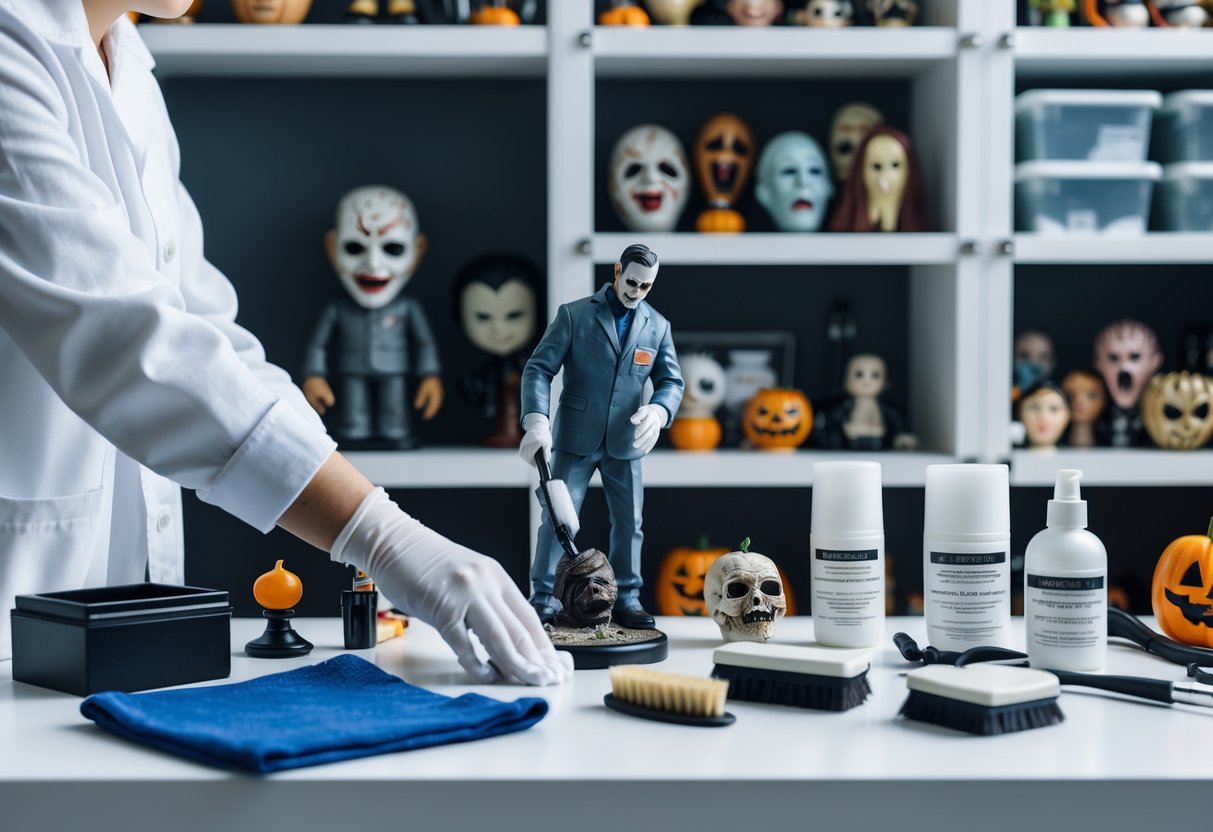
Honestly, regular care matters more than anything else. Cleaning, checking, and keeping good records help me spot issues and keep my collection in great shape.
Routine Cleaning for Various Materials
I clean my horror collectibles every couple of months, using different methods for each material. Paper items like old posters? I dust them with a soft brush or microfiber cloth and never use water.
Plastic figures get a slightly damp microfiber cloth. I skip harsh cleaners since they mess up paint and plastic.
Metal props get a wipe with mild soap and a soft cloth.
My cleaning routine:
- Monthly: Light dusting
- Quarterly: Deep clean
- Twice a year: Clean storage containers
I always wear cotton gloves for valuable items. Oils from my hands can do more harm than you’d think.
For stubborn dirt on plastic, I use a cotton swab with a bit of distilled water.
Fabric collectibles are tricky. I use a vacuum with a soft brush for costumes and fabric posters, but I never try to wash old fabrics myself.
Scheduled Inspection and Condition Checks
Every three months, I go through my collection and look for damage. I check for fading, warping, pests, or moisture.
I also check storage containers for tight seals and swap out silica gel packets if needed. Temperature and humidity get checked every month.
What I look for:
- Color fading
- Warping or bending
- Pest holes
- Mold or moisture spots
- Storage container issues
I jot down any changes in my records. Photos help me track condition over time.
If I find a problem, I fix it right away. Small issues can snowball if I ignore them.
For valuable items needing restoration, I don’t hesitate to call a pro.
Updating Inventory and Rotating Displays
Every six months, I update my inventory with new items and condition notes. It helps me keep track of value and status.
I take digital photos of each piece from different angles and keep everything in a spreadsheet, with backups online. Insurance info gets updated too.
What I track:
- Description and date acquired
- Condition
- Where it’s stored
- Estimated value
- Insurance details
I rotate displayed items every few months to limit light exposure. Proper storage containers really do make a difference.
Rotating displays also keeps things interesting. During extreme weather, I move valuable stuff to climate-controlled storage.
Frequently Asked Questions
People ask me about care and storage for horror collectibles all the time. Here are the most common questions I get, with my best advice.