
*This post may contain affiliate links for which I earn commissions.*
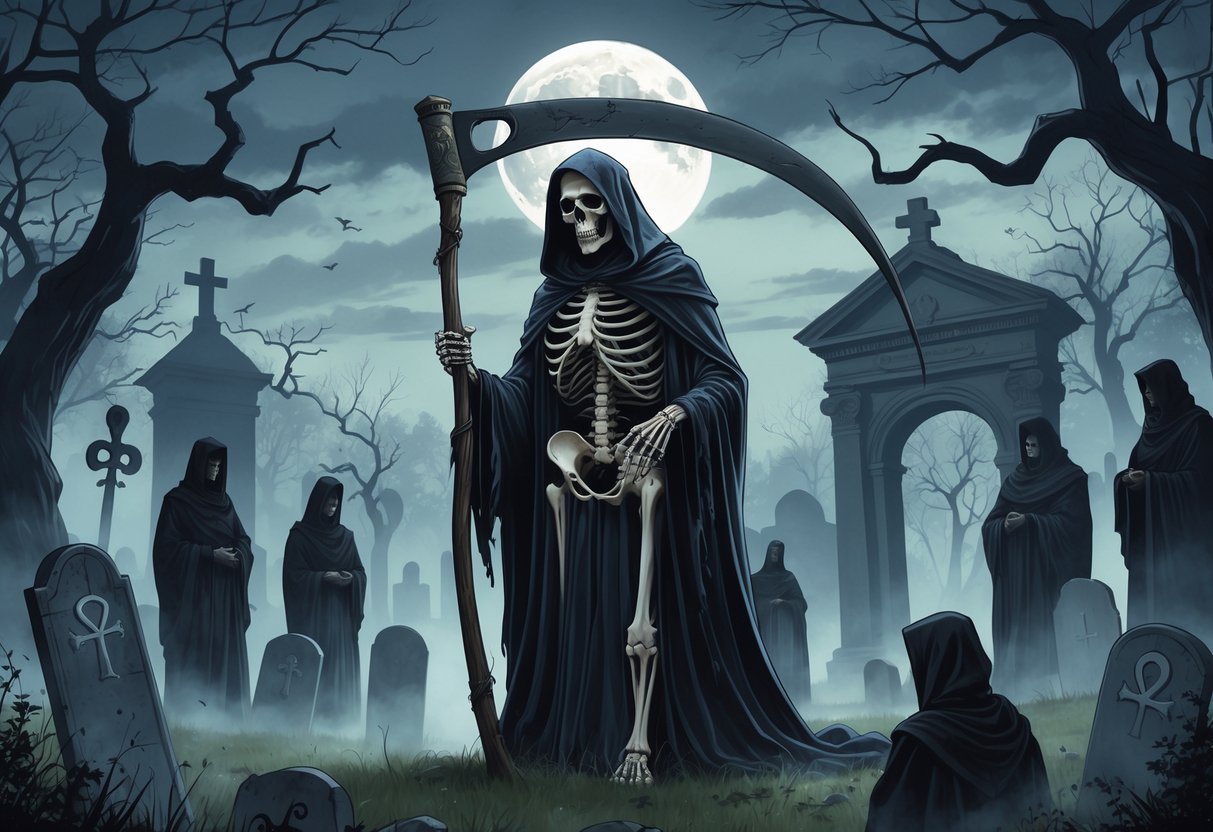
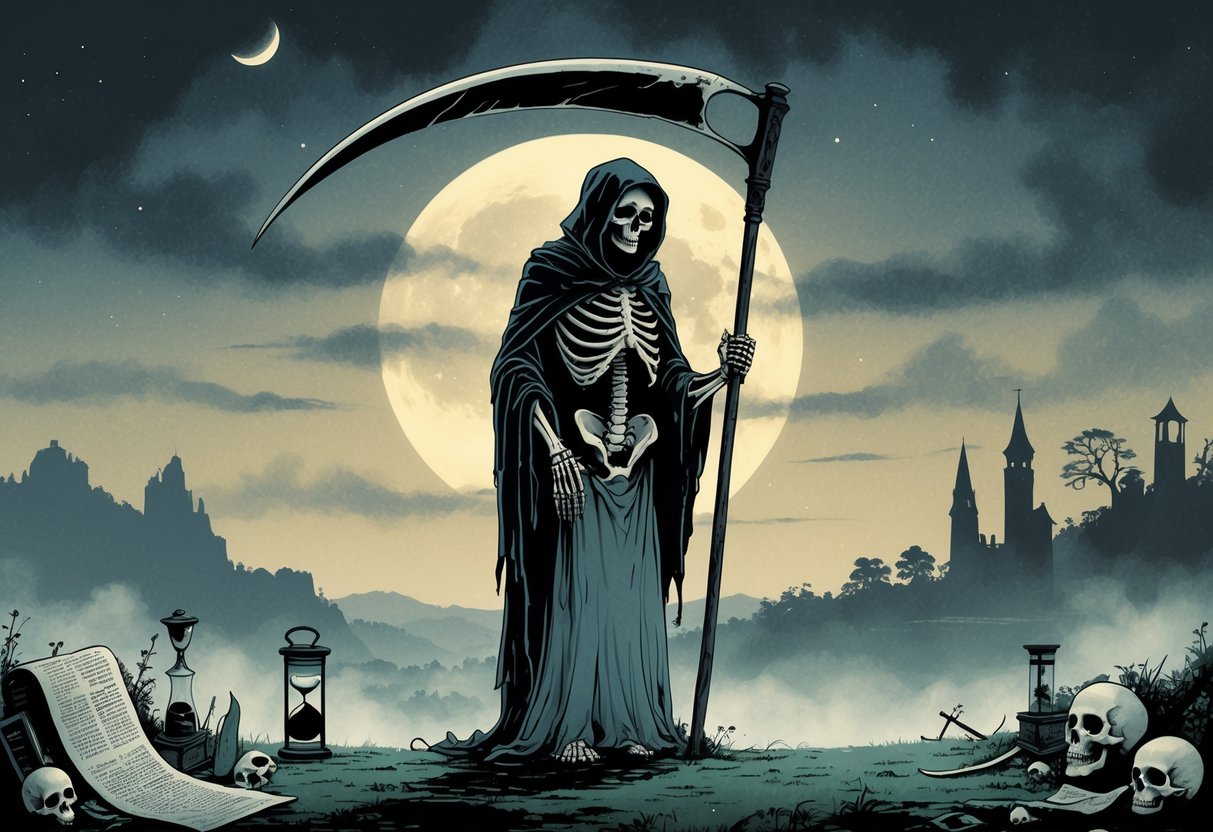
When I think about iconic symbols of death, one figure immediately comes to mind: the hooded skeleton carrying a scythe.
The Grim Reaper first appeared in Europe during the 14th century when the Black Death pandemic killed about one-third of the continent’s population.
This terrifying time created a need for people to give death a recognizable face, and that’s exactly what happened.
What fascinates me most is how this medieval creation has never left our culture.
I see the Grim Reaper everywhere today, from Halloween decorations to cute little kitchen finds like this tea infuser, not to mention video games and movie villains.
The skeletal figure in black robes has become more than just a symbol of death.
It represents our deepest fears and our attempts to understand what happens when life ends.
The story behind this iconic figure involves ancient beliefs, religious symbolism, and artistic traditions that merged during humanity’s darkest hours.
I’ll look at how a simple farming tool became associated with harvesting souls, why different cultures adapted this European concept, and what keeps us so captivated by this mysterious figure centuries later.
The Origins of the Grim Reaper
The Grim Reaper didn’t just pop up overnight.
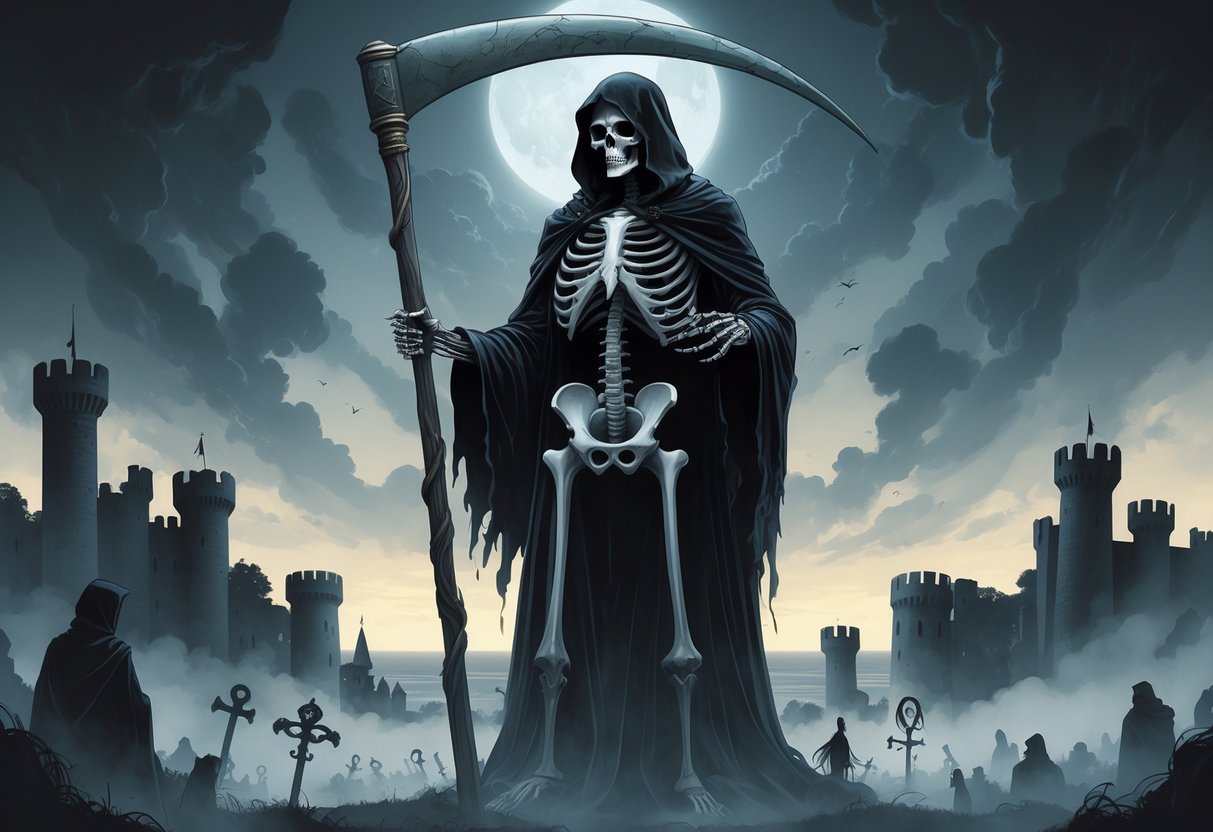
He grew out of ancient death symbols and was shaped by Europe’s worst pandemic.
The Black Death transformed how people viewed death and gave birth to the skeletal figure we recognize today.
Ancient Personifications of Death
Long before I ever heard of the Grim Reaper, ancient cultures had their own death personifications.
These early figures shared common traits but looked different across civilizations.
The Greeks had Thanatos, a winged god who brought peaceful death.
Romans called him Mors.
Both cultures showed death as a divine force, not necessarily something terrifying.
Key Ancient Death Figures:
- Thanatos (Greek): Winged god of gentle death
- Mors (Roman): Death deity adopted from Greeks
- Anubis (Egyptian): Jackal-headed guide to afterlife
- Hel (Norse): Half-living, half-dead ruler of the underworld
These early versions were often divine or noble.
They didn’t carry scythes or wear dark robes.
Death was seen as a natural part of life, not something to fear.
Influence of the Black Death
The modern Grim Reaper emerged during Europe’s darkest period.
The Grim Reaper appeared in Europe during the 14th century when the Black Death killed one-third of the population.
This pandemic changed everything.
Death wasn’t noble or peaceful anymore.
It was sudden, painful, and everywhere.
Black Death Impact (1347-1351):
- 75-200 million deaths across Europe
- Entire villages wiped out
- Bodies piled in streets
- Social order collapsed
People needed a new way to understand death.
The old gods seemed too gentle for this horror.
They created a figure that matched their fear and desperation.
The plague made death feel like a harvester cutting down people like wheat.
This farming image would become central to the Grim Reaper’s look.
The Evolution of the Skeleton Figure
I find it interesting how the Grim Reaper’s appearance tells a story.
Each part of his look came from the medieval world’s experience with death and religion.
The skeleton represents what I see after the body decays.
During the plague, people saw lots of bones and corpses.
Skeletons became the perfect symbol for death itself.
Grim Reaper Elements:
- Skeleton: What remains after death
- Black robe: Similar to priests’ funeral clothes
- Scythe: Farm tool for harvesting crops
- Hood: Hides the face, making death mysterious
The scythe connects to farming practices of the time.
Farmers used scythes to harvest crops when they were ready.
Death “harvests” people the same way.
The black robe came from religious funeral services.
Priests wore similar robes when burying the dead.
This made the Grim Reaper feel both religious and scary.
By the late 1300s, artists were drawing this skeletal figure in paintings and books.
The image spread across Europe and became the death symbol I recognize today.
Iconography: Scythe, Robe, and Symbolism
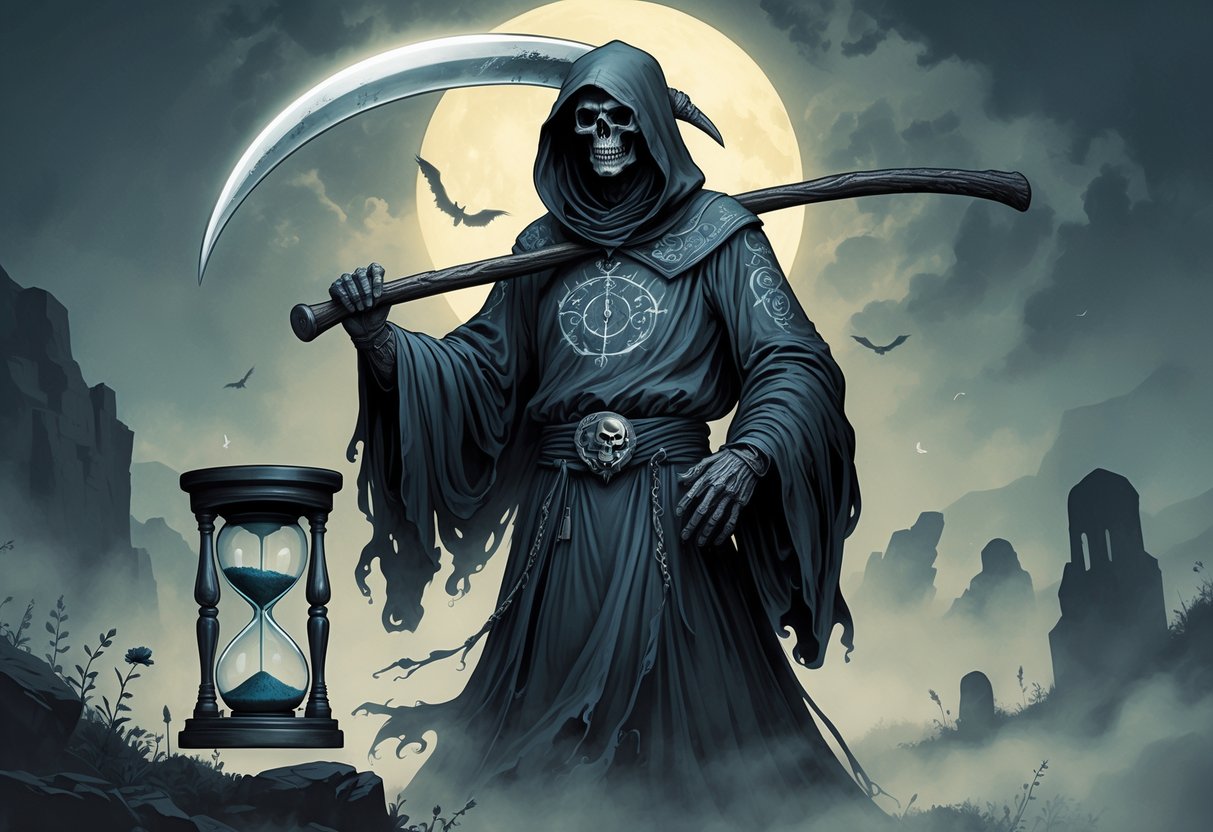
The Grim Reaper’s visual elements each carry deep meaning.
The farming tool, dark clothing, and skeletal form combine to create one of history’s most recognizable symbols.
Why the Scythe and Sickle?
The scythe became the Grim Reaper’s signature tool because of its connection to harvesting crops.
Farmers use this curved blade to cut grain when it’s ready.
This created a perfect comparison to death.
Just as farmers harvest wheat at the right time, death “harvests” human souls when their time comes.
I find it interesting that the scythe symbolizes the power and inevitability of death.
The tool suggests that death, like farming, follows natural cycles.
The sickle, a smaller curved blade, appears in some depictions too.
Both tools share the same harvesting meaning.
Key symbolism of the scythe:
- Harvesting: Cutting down life like grain
- Timing: Death comes at the “right” moment
- Power: The ability to end life with one swing
- Inevitability: Everyone gets harvested eventually
Hooded Robe and Hidden Identity
The dark, hooded robe serves multiple symbolic purposes.
It hides the Grim Reaper’s face, making death feel mysterious and unknown.
Black represents mourning, endings, and the void.
The hood creates anonymity, showing that death treats everyone equally.
I notice the robe also suggests a religious figure.
Medieval monks wore similar clothing, connecting death to spiritual matters.
The flowing fabric makes the figure appear to glide rather than walk.
This adds to its supernatural, otherworldly presence.
The hidden face is particularly important.
Since no one knows what death looks like, the hood maintains that mystery.
Robe symbolism includes:
- Mystery: Hidden identity of death
- Equality: Death doesn’t show favorites
- Spirituality: Connection to religious concepts
- Authority: Formal, ceremonial appearance
Skeleton Imagery and Mortality
The skeleton figure represents what remains after death.
I see this as the most direct symbol of mortality possible.
Bones are what’s left when flesh decays.
This reminds me that physical bodies are temporary while death is permanent.
The skeleton imagery became popular during the 14th century when plague killed millions.
People saw death everywhere and artistic depictions reflected this reality.
A skeleton figure also suggests that death itself is already dead.
It can’t be killed or stopped because it has no life to lose.
The empty eye sockets create an unsettling stare.
This faceless gaze suggests death watches everyone without emotion or mercy.
Skeleton symbolism represents:
- Mortality: Physical bodies decay and die
- Universality: Everyone becomes bones eventually
- Permanence: Death cannot be undone
- Emotionless: Death shows no feelings or preferences
The Grim Reaper Across Cultures and Religions
Death figures show up in cultures worldwide.
Greek mythology gives us Thanatos and Hermes as key examples.
Many societies created their own death deities to help explain the mystery of dying.
These figures often served as guides between the world of the living and the dead.
Thanatos and Hermes in Greek Mythology
In Greek mythology, Thanatos was the actual personification of death itself.
He was the son of Nyx (Night) and Erebus (Darkness).
Unlike our scary Grim Reaper, Thanatos was usually shown as a gentle, winged young man.
Thanatos had a twin brother named Hypnos, who was the god of sleep.
This connection shows how the Greeks saw death and sleep as closely related.
Hermes played a different but important role.
He was the messenger god who guided souls to the underworld after they died.
While Thanatos brought death, Hermes helped souls make the journey to their final resting place.
The Greeks saw death as a natural part of life.
Their death figures weren’t meant to scare people like our modern Grim Reaper often does.
Death Deities Around the World
Different cultures created their own versions of death figures.
I find it interesting how various cultures have had figures to represent death for thousands of years.
Here are some examples from around the world:
- Anubis (Egypt) – A jackal-headed god who guided souls and protected the dead
- Hel (Norse) – A half-living, half-dead goddess who ruled over those who died of sickness or old age
- Morrigan (Celtic) – A crow goddess who appeared on battlefields to collect the souls of warriors
- Mictlantecuhtli (Aztec) – A skeletal lord of the dead who ruled the underworld
Each culture shaped their death figure based on their own beliefs about what happens after we die.
Some were scary, others were kind helpers.
Role as a Psychopomp
A psychopomp is a guide who helps souls travel between worlds.
The word comes from Greek and means “soul guide.”
Many death figures serve this important job.
These guides don’t cause death.
Instead, they help souls find their way after dying.
Think of them like helpful escorts rather than killers.
Hermes was one of the most famous psychopomps in Greek stories.
He would lead souls down to the river Styx, where they would cross into the underworld.
In many cultures, Death is viewed as a benevolent entity who guides the soul from a living person to the afterlife.
A transport, but not the cause of death.
This shows how different our modern scary Grim Reaper is from these older, kinder guides.
Medieval Art and Literature: Establishing the Archetype
Medieval artists and writers transformed the basic concept of death into the detailed skeleton figure we recognize today.
The period saw the rise of dance-themed death art, masterful paintings, and stories that made the Grim Reaper a central character in European culture.
The Danse Macabre and Artistic Motifs
The Danse Macabre became one of the most important art themes in medieval Europe.
This “dance of death” showed skeletons leading people from all walks of life to their graves.
I find it fascinating how these artworks appeared across Europe during the 1400s and 1500s.
Churches, cemeteries, and public buildings featured these dramatic scenes painted on walls and carved in stone.
The dance theme sent a clear message: death comes for everyone.
Rich or poor, young or old, everyone must join the dance eventually.
Artists used specific symbols that became standard.
The hourglass represented time running out.
The scythe showed death harvesting souls like crops.
The dark robes made the skeleton figure more mysterious and scary.
These artistic choices weren’t random.
They came from real medieval life, where farming tools and religious clothing were part of daily experience.
Notable Depictions in Paintings
Medieval painters created some of the most memorable images of death personified.
Hans Holbein the Younger painted a famous series called “The Dance of Death” in the 1520s.
His work showed the skeleton figure interacting with different types of people.
Each painting told a story about how death affects everyone differently but still comes for all.
Medieval art and literature often featured this imagery, showing death as something that couldn’t be avoided.
Churches commissioned many of these works to remind people about mortality.
The paintings usually showed the skeleton figure in black robes.
Artists gave it human-like poses and gestures, making death seem more real and personal.
Some paintings showed multiple skeletons leading entire groups of people.
Others focused on single encounters between death and one person.
The Grim Reaper in Medieval Storytelling
Medieval writers really brought the grim reaper to life in their tales and poems. They gave Death a voice, a personality, something more than just a spooky image.
Mystery plays in town squares often put death right on stage. These performances mixed religious lessons with dramatic, sometimes over-the-top, death scenes.
Stories usually painted death as fair, with no escaping it. The figure might show up to warn folks, or just quietly collect them when their time was up.
Writers loved describing the reaper’s look. They talked about bones clacking, robes swishing, and that sharp scythe slicing the air.
Some stories had people trying to cut deals with death. Others showed the reaper guiding souls to whatever came next.
Modern Obsession: The Grim Reaper in Popular Culture
The Grim Reaper pops up everywhere now, from blockbuster movies to cheesy neighborhood decorations. I keep seeing new takes on the figure. Sometimes scary, sometimes funny, sometimes oddly wise.
Film and Media Interpretations
Movies and TV have given the Grim Reaper all sorts of personalities. I remember watching The Seventh Seal, where Death plays chess and asks deep questions. That 1957 film made the reaper thoughtful, not just terrifying.
Modern shows go in all directions. I see the Reaper cracking jokes in cartoons or getting outsmarted in sitcoms.
Popular portrayals include:
- Wise guides helping souls cross over
- Comedy characters who bungle the job
- Romantic figures in supernatural dramas
- Action heroes fighting evil
The best grim reapers in pop culture really show how flexible this symbol is. Writers use the Reaper to dig into themes like second chances, redemption, and what makes life meaningful.
Halloween and Cultural Celebrations
Halloween turned the Grim Reaper into a party guest. Every October, I spot that black robe and scythe everywhere: costumes, lawn ornaments, candy wrappers.
The influence on Halloween and gothic subculture is pretty deep. Haunted houses hire Reaper actors, and kids dress up as mini-Reapers without a second thought.
Halloween uses include:
- Costume contests and trick-or-treating
- Haunted house characters
- Lawn decorations
- Horror movie marathons (perfect with these horror night bundles)
Halloween made death less scary by turning the Reaper into something you can laugh at or even hug. It’s a weirdly comforting way to deal with big, scary topics.
Influence on Literature and Visual Arts
Writers and artists keep finding new angles for the Reaper. I’ve read books where Death narrates the story or even falls in love. Graphic novels draw the Reaper with wild weapons and bold personalities.
Visual artists love remixing the look. I see Reapers in bright colors, female versions, and even ones in sneakers instead of boots. Tattoos and street art go all out with personal twists.
Artistic trends include:
- Female versions of Death
- Bright, unexpected colors
- Modern settings and tech
- Cultural mashups
The representation in literature and poetry keeps changing. Now, the Reaper pops up in stories about medical ethics, aging, or even politics. These newer takes feel more layered than the old “just scary” versions.
The Enduring Appeal: Why We’re Still Fascinated
The Grim Reaper grabs our imagination because it lets us poke at our deepest fears, like death, endings, and the unknown, without getting overwhelmed.
Facing Mortality Through Stories
Stories about the Grim Reaper give us a safe way to think about death. When I spot the Reaper in a movie or book, death feels less mysterious.
That bony figure gives us something to picture, instead of just a blank void. Death becomes a character, not just a concept.
Many cultures use the Grim Reaper as a reminder of mortality to nudge people toward living better. If death has a face, maybe you can talk to it, or at least imagine what you’d say.
We get to watch characters bargain with Death, freak out, or accept their fate. It’s like a rehearsal for real life… well, sort of.
Sometimes the Grim Reaper even comes off as fair or gentle. That’s oddly reassuring, isn’t it?
Dark Humor and Coping Mechanisms
Laughing about death helps us cope. The Grim Reaper is in so many jokes and memes, it almost feels normal.
Comedy shows and cartoons love making the Reaper clumsy or awkward. Death becomes someone who slips on banana peels, not just a menace.
Dark humor lets us talk about the big stuff without falling apart. You can joke about the Reaper and not have to face real loss right then.
Memes of the Grim Reaper on vacation or messing up the job are everywhere. It’s silly, but it works.
Honestly, making fun of death feels like a tiny bit of control, even if it’s just an illusion.
The Grim Reaper as a Reflection of Society
How we picture the Grim Reaper says a lot about what we’re scared of. During plagues, artists made the Reaper extra terrifying.
Modern versions look less scary, maybe because we trust medicine more. The Reaper’s still around, but not quite as chilling as in old paintings.
The Grim Reaper’s enduring presence in modern society shows we still wrestle with death, even with all our science.
When things get rough, like wars, pandemics, or who knows what, the Reaper pops up more in movies and art. It’s like we need a symbol for the stuff we can’t explain.
Different countries tweak the Reaper’s look. Some make it peaceful, others go for nightmare fuel. It all depends on what people believe about dying.
Frequently Asked Questions
I get asked these questions about the Grim Reaper all the time. Here’s what people seem most curious about, from ancient myths to modern movies.